Dog Aggression Toward Other Dogs: 7 Expert Tips to Stop Bad Behavior
Our blogs are well-researched and medically reviewed under editorial team. The information is sourced from trusted and accurate sites.
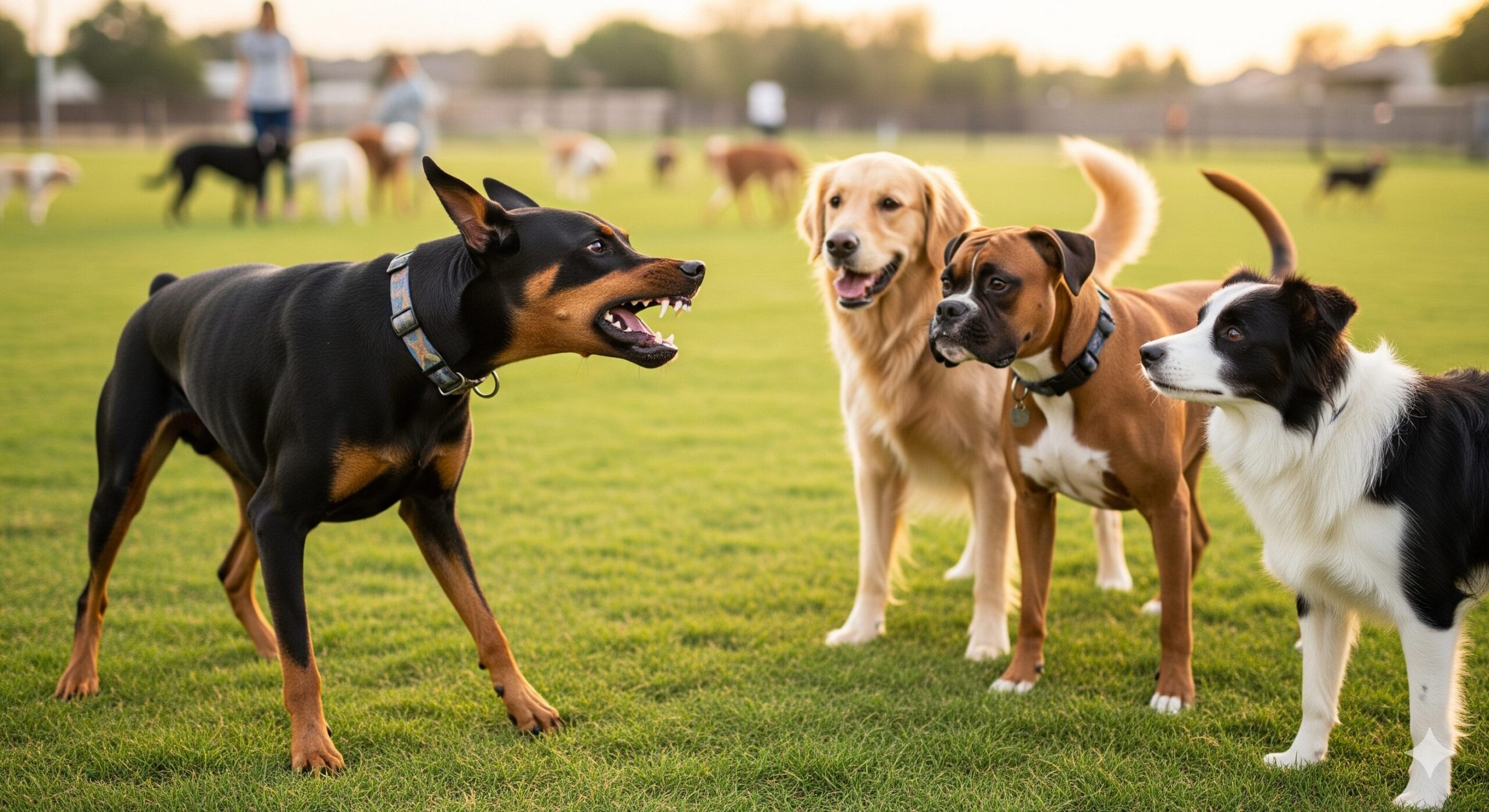
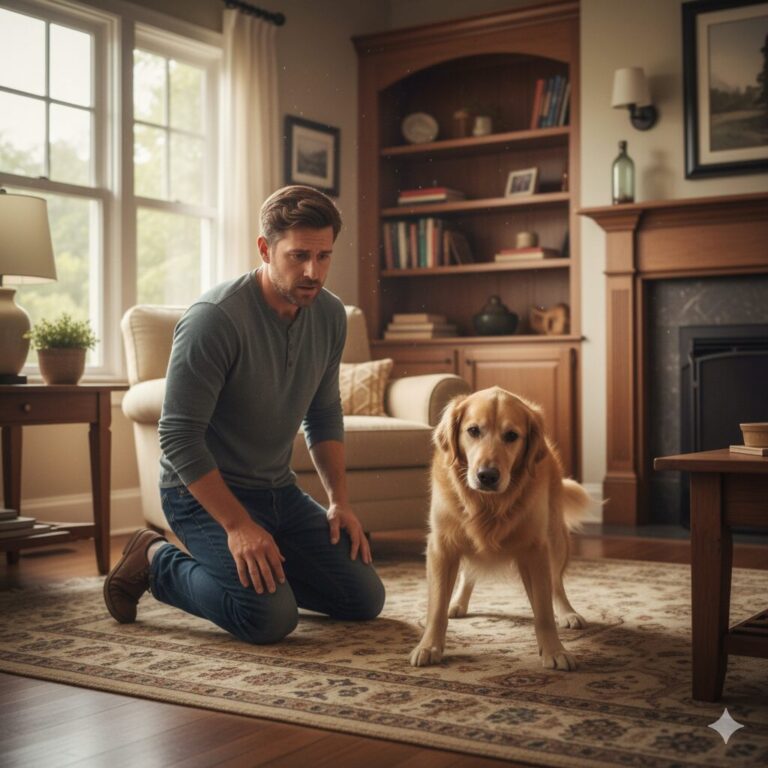
Dog aggression toward other dogs can turn peaceful walks into stressful ordeals. If your furry friend lunges, barks, or shows hostility when encountering other dogs, you’re not alone. This challenging behavior affects millions of dog owners and requires understanding, patience, and the right approach to resolve.
Canine aggression doesn’t develop overnight. Multiple factors contribute to this complex behaviour, including genetic and socialisation gaps, as well as fear-based responses and territorial instincts. The good news? Most cases of dog-to-dog aggression can be successfully managed and often resolved with expert-approved techniques tailored to your dog’s specific triggers.
This comprehensive guide covers the causes of inter-dog aggression and offers seven proven strategies to help your dog develop healthier social skills. Whether you’re dealing with leash reactivity, resource guarding around other dogs, or general social anxiety, these expert-backed solutions will set you on the path toward calmer, more enjoyable outings with your canine companion.
Understanding Dog Aggression Toward Other Dogs
Dog-to-dog aggression manifests in various ways, from subtle warning signs to overt hostile behavior. Recognizing these patterns helps you address the issue before it overgrows.
What are the signs that your dog is aggressive toward other dogs?
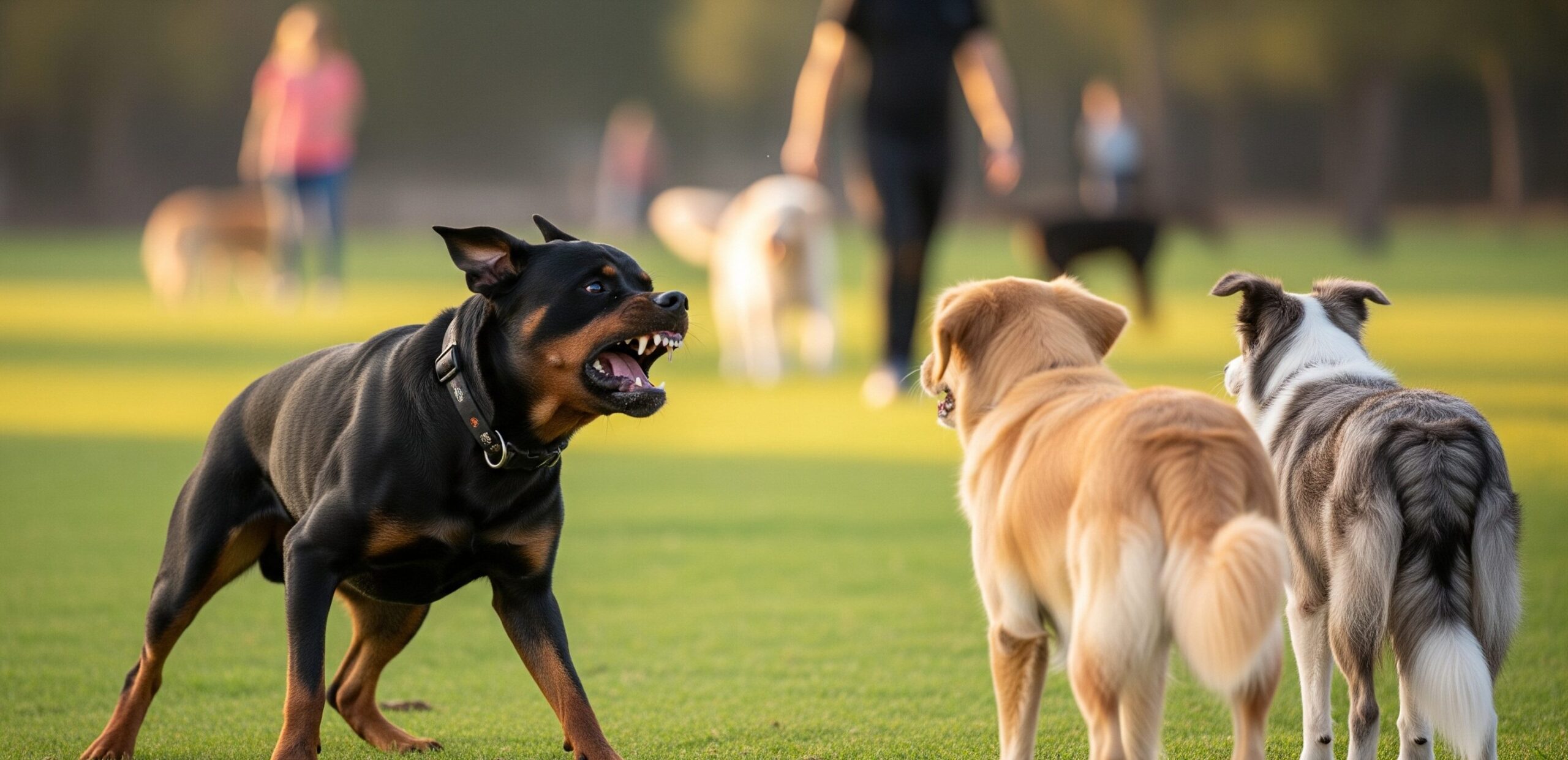
- Stiff body posture when seeing other dogs.
- Raised hackles along the neck and back.
- Intense staring or “hard eyes.”
- Growling, snarling, or lip lifting.
- Lunging or pulling toward other dogs.
- Barking with aggressive undertones.
Why does my dog act aggressive toward some dogs and not others?
Your dog may act aggressively toward some dogs but not others due to specific triggers. This selective behavior is common and often stems from a few key reasons.
- Poor past experiences with a certain type of dog can create fear or defensiveness.
- The other dog’s size, breed, or energy level may be intimidating.
- Your dog might be less tolerant of dogs of the same gender.
- The context plays a role, such as being on a leash or protecting a favourite toy.
- Some dogs lack socialization and are unsure how to interact politely.
Why Is My Dog Aggressive Toward Other Dogs-Root Causes of Inter-Dog Aggression
Understanding why your dog displays aggressive behavior is crucial for selecting the right intervention approach. The following are the root causes of aggressive behaviour toward other dogs:
- Fear-based aggression
- Territorial Aggression
- Breed-specific considerations
Let’s explain each of them
- Fear-based aggression stems from negative experiences or inadequate socialization during puppyhood. Dogs who missed critical socialisation windows (3-16 weeks of age) often struggle with appropriate canine communication throughout their lives.
- Territorial Aggression occurs when dogs perceive other canines as threats to their space, resources, or family members. This behavior intensifies in familiar environments like your home or regular walking routes. Leash reactivity develops when dogs feel trapped or restricted by their leash, creating frustration that manifests as aggressive displays toward other dogs. The inability to follow natural greeting behaviors often amplifies this response.
- Breed-specific considerations also play a role. Some breeds were developed for guardian roles or have higher prey drives, making them naturally more suspicious of unfamiliar dogs. However, genetics never excuses aggressive behaviour-proper training works across all breeds.
How to Stop Dog Aggression Towards Other Dogs-7 Expert-Approved Solutions
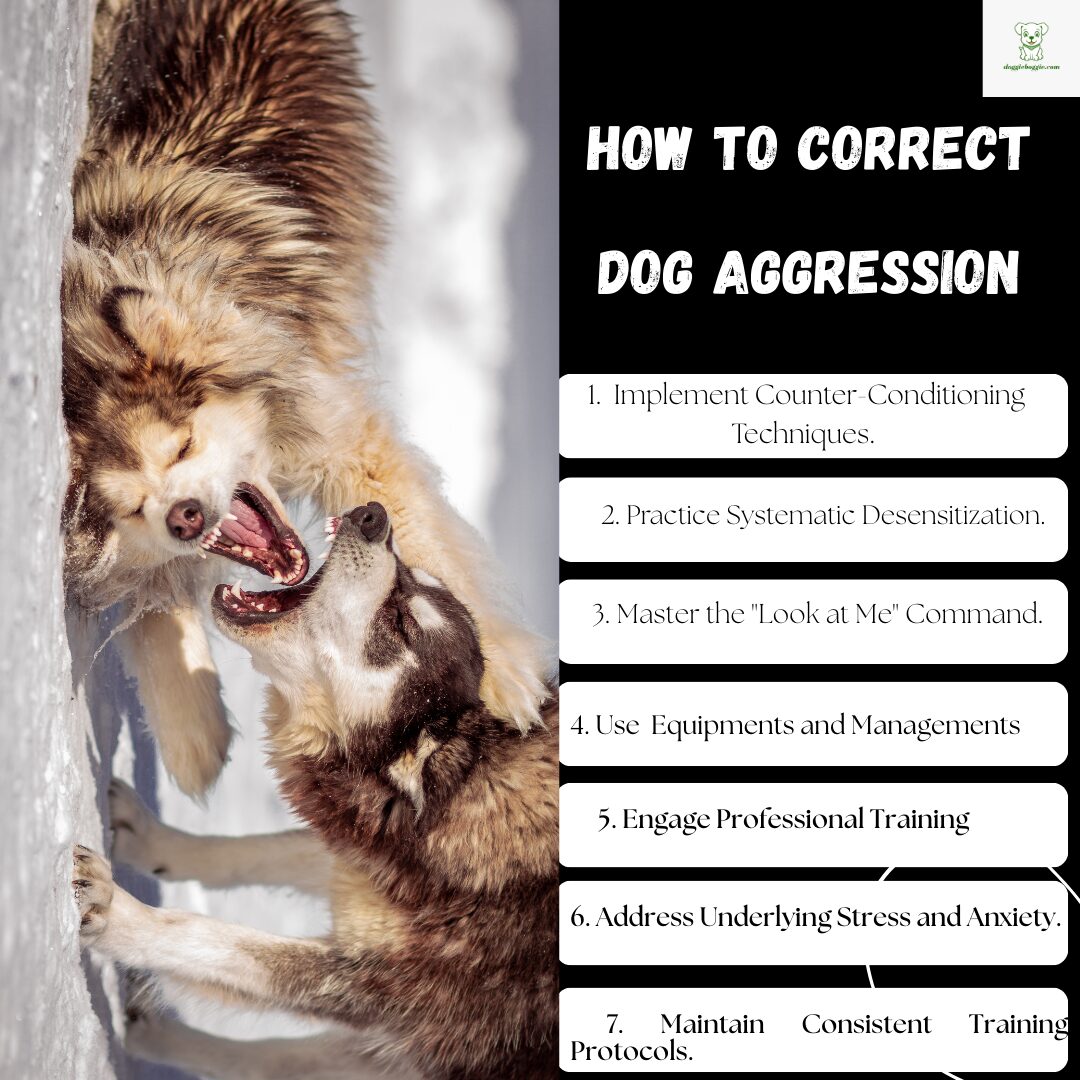
1. Implement Counter-Conditioning Techniques
The goal of counter-conditioning is to reprogram a dog’s emotional reaction to the sight of other dogs, linking the trigger to a favourable outcome. The effectiveness of this basic strategy is dependent on steadfast repetition and calm persistence, but it leads to reliable and permanent improvements. Start at a distance where your dog notices other dogs but remains calm-this is called the “threshold distance.”
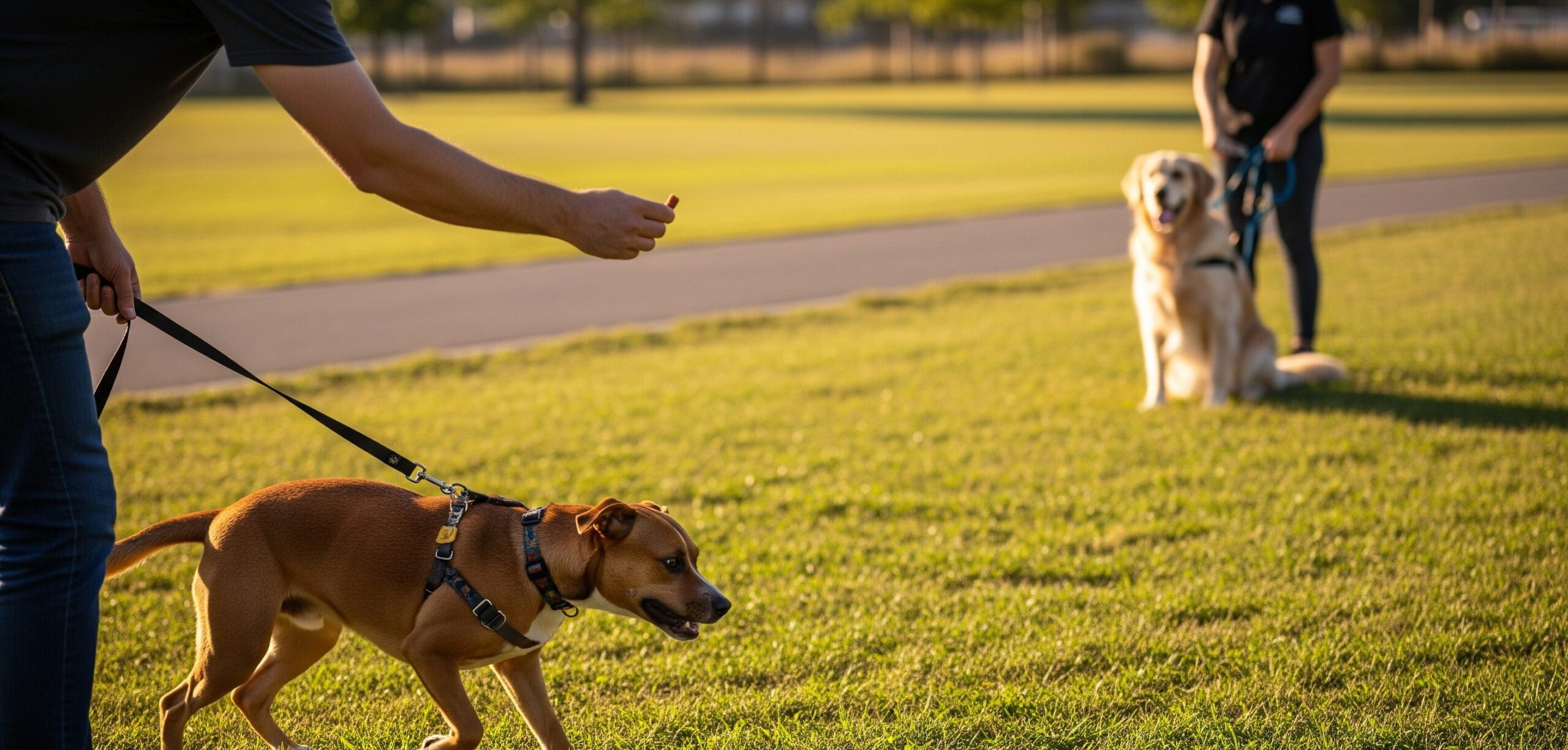
When your dog looks at another dog and remains calm, reinforce that behavior immediately with a special reward. Gradually decrease the distance as your dog’s comfort level improves.
Expert Advice: Employ a high-value reward that your dog highly desires, like bits of boiled chicken or freeze-dried organ meat. The reward must be more exciting than the trigger.
2. Practice Systematic Desensitisation
This gradual exposure method helps dogs overcome their fear or aggression triggers through controlled, positive experiences. Introduce the concept in a zero-pressure scenario and build up the challenge in small, incremental steps.
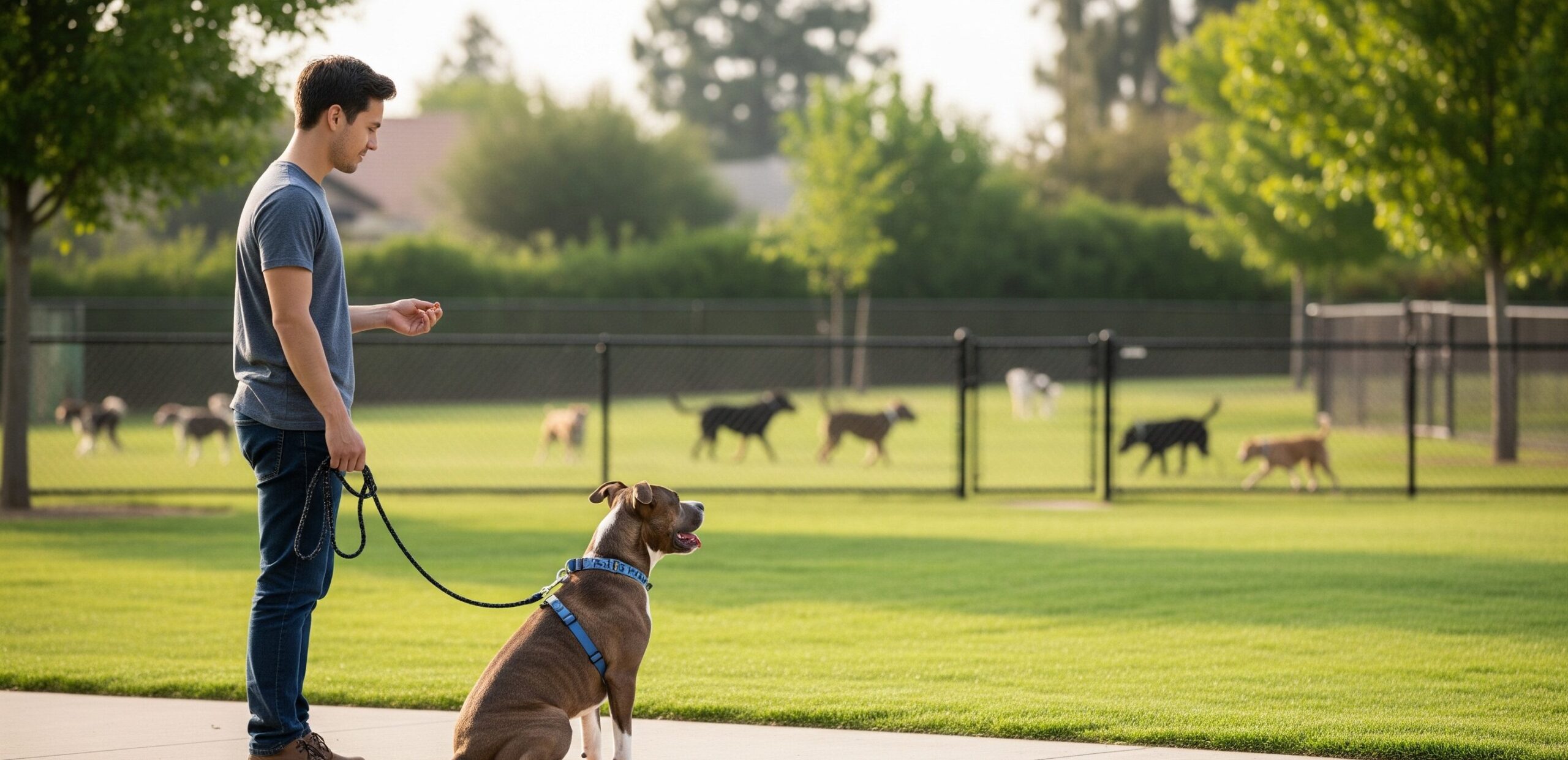
Create a hierarchy of triggering situations, starting with distant dogs, moving to closer encounters, then different dog sizes and breeds. Make sure every training period concludes with a win for the dog, prior to them reaching a point of discomfort or fatigue.
Professional dog trainers recommend 15-minute sessions, 3-4 times per week, for optimal results without overwhelming your pet.
3. Master the “Look at Me” Command
Teaching your dog to focus on you instead of other dogs provides an invaluable management tool during encounters. This redirection technique interrupts the aggressive response cycle.
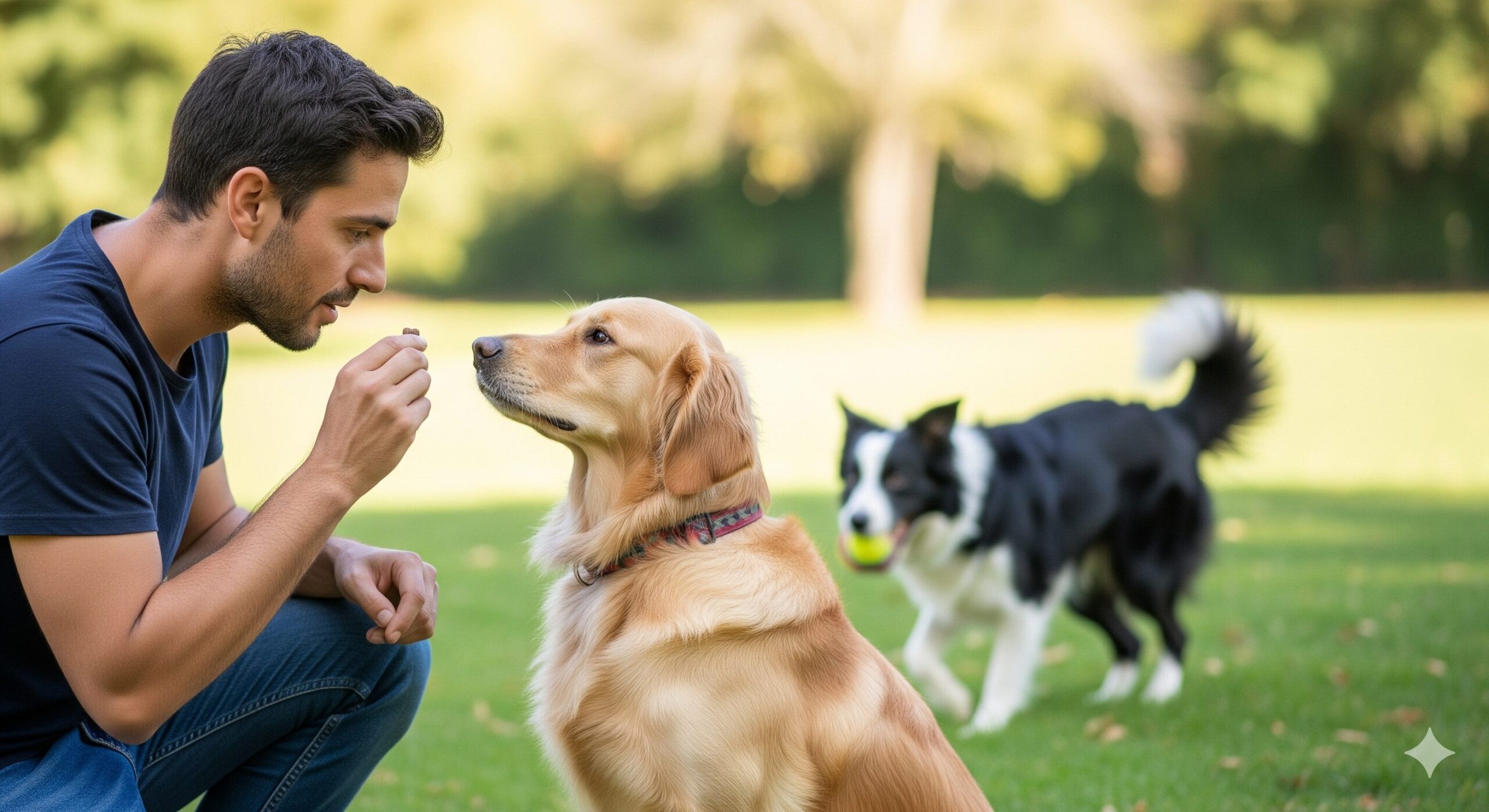
Practice this command in low-distraction environments first. Hold a treat near your face, say “look at me” or “watch,” and reward when your dog makes eye contact.
Progressively add low-level distractions to your sessions, eventually advancing to training near other canines at a distance that maintains calm behavior.
4. Use Proper Equipment and Management
The right equipment significantly impacts your dog’s behavior during walks and encounters.
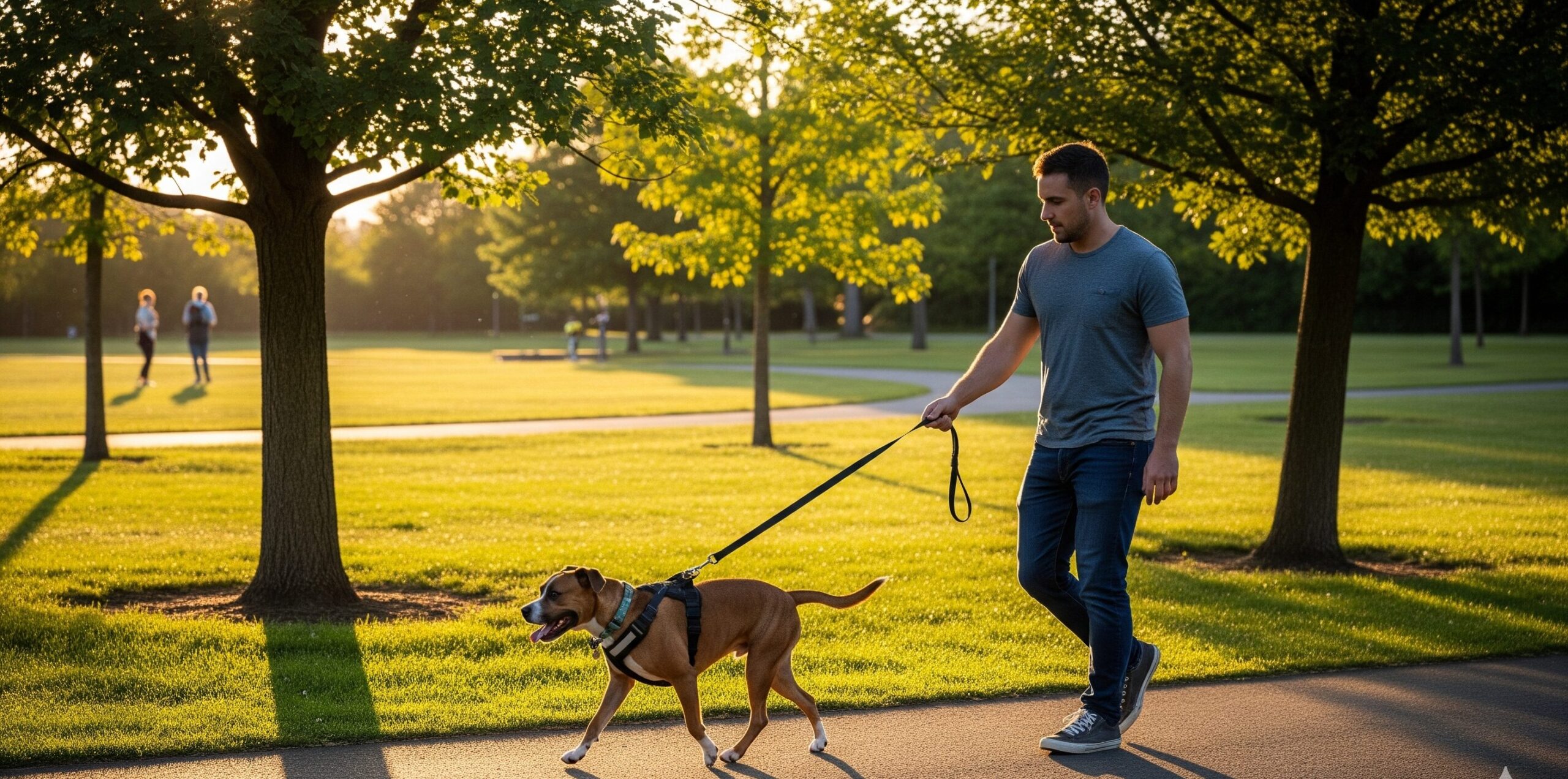
- Front-clip harnesses reduce pulling and give you better control without causing neck strain.
- Head halters work well for strong dogs but require gradual introduction to ensure comfort.
- Avoid retractable leashes, which provide inconsistent feedback and make it difficult to maintain appropriate distances from triggers.
Management strategies include:
- Opt for walking paths and schedules with minimal foot and canine traffic.
- Select routes and times of day that are typically quiet and less populated.
- Plan walks during off-peak hours and in low-density areas to avoid encounters.
5. Engage Professional Training
Support Certified dog behaviourists and trainers specialising in aggression provides invaluable expertise for severe cases. A professional will identify your dog’s unique reactivity catalysts, develop a personalised training program, and coach you on its effective execution.
Prioritise hiring a trainer or behaviourist who holds accreditation from a reputable body such as the CCPDT or IAABC. Group training classes for reactive dogs offer controlled socialisation opportunities under expert supervision, allowing your dog to practice appropriate behaviours around other dogs in a structured environment.
6. Address Underlying Stress and Anxiety
Chronic stress exacerbates aggressive behaviors, making training less effective. Evaluate your dog’s overall stress levels and implement calming strategies alongside behavioural training. Stress-reduction techniques include:
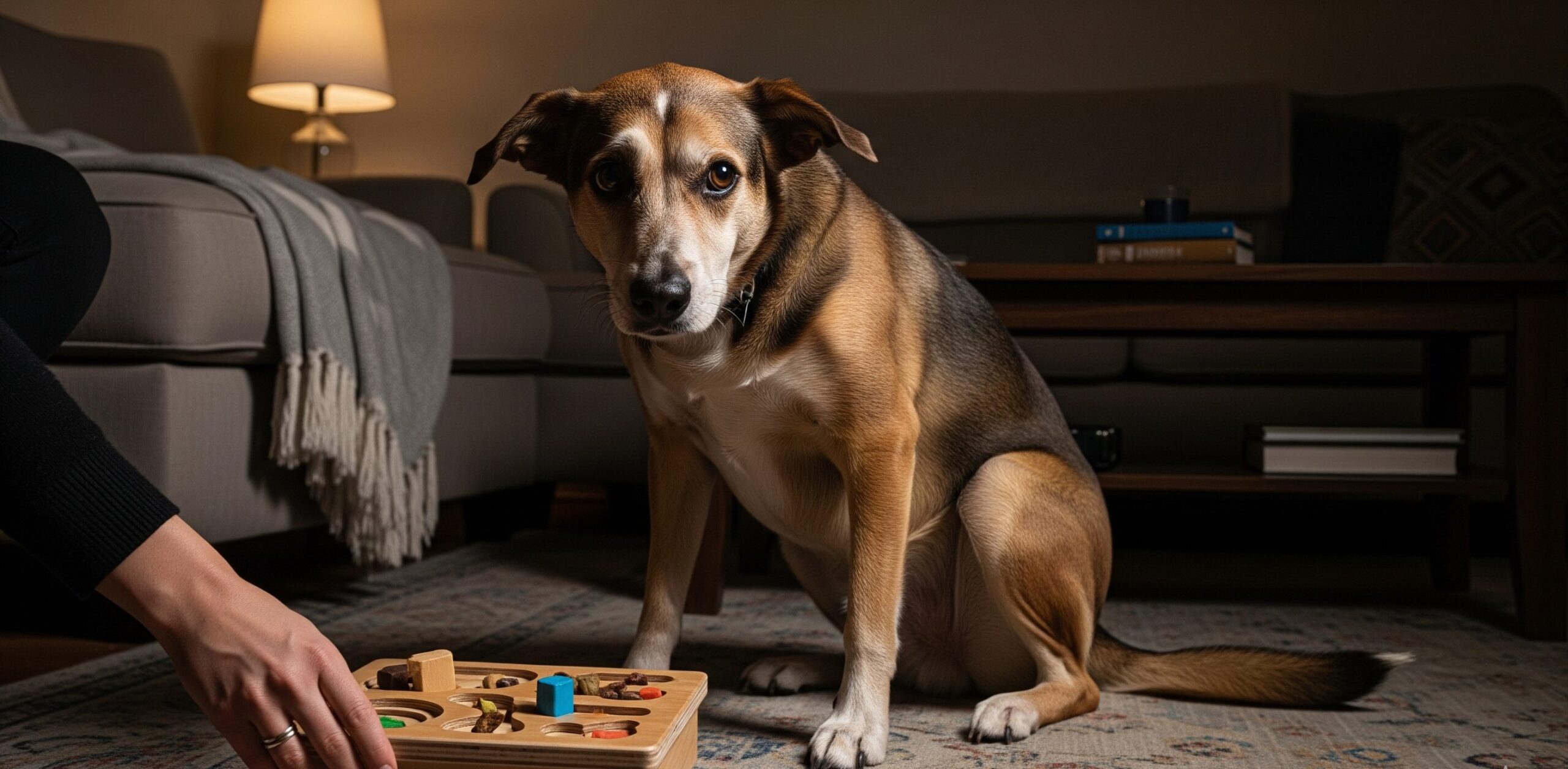
- Establishing a consistent daily routine.
- Providing adequate mental stimulation through puzzle toys
- Ensure sufficient physical exercise appropriate for your dog’s breed and age.
- Creating safe spaces at home where your dog can retreat.
- Consider calming supplements (consult your veterinarian first).
7. Maintain Consistent Training Protocols
Consistency across all family members ensures clear communication and faster progress. Everyone interacting with your dog should use the same commands, rewards, and responses to aggressive behavior.
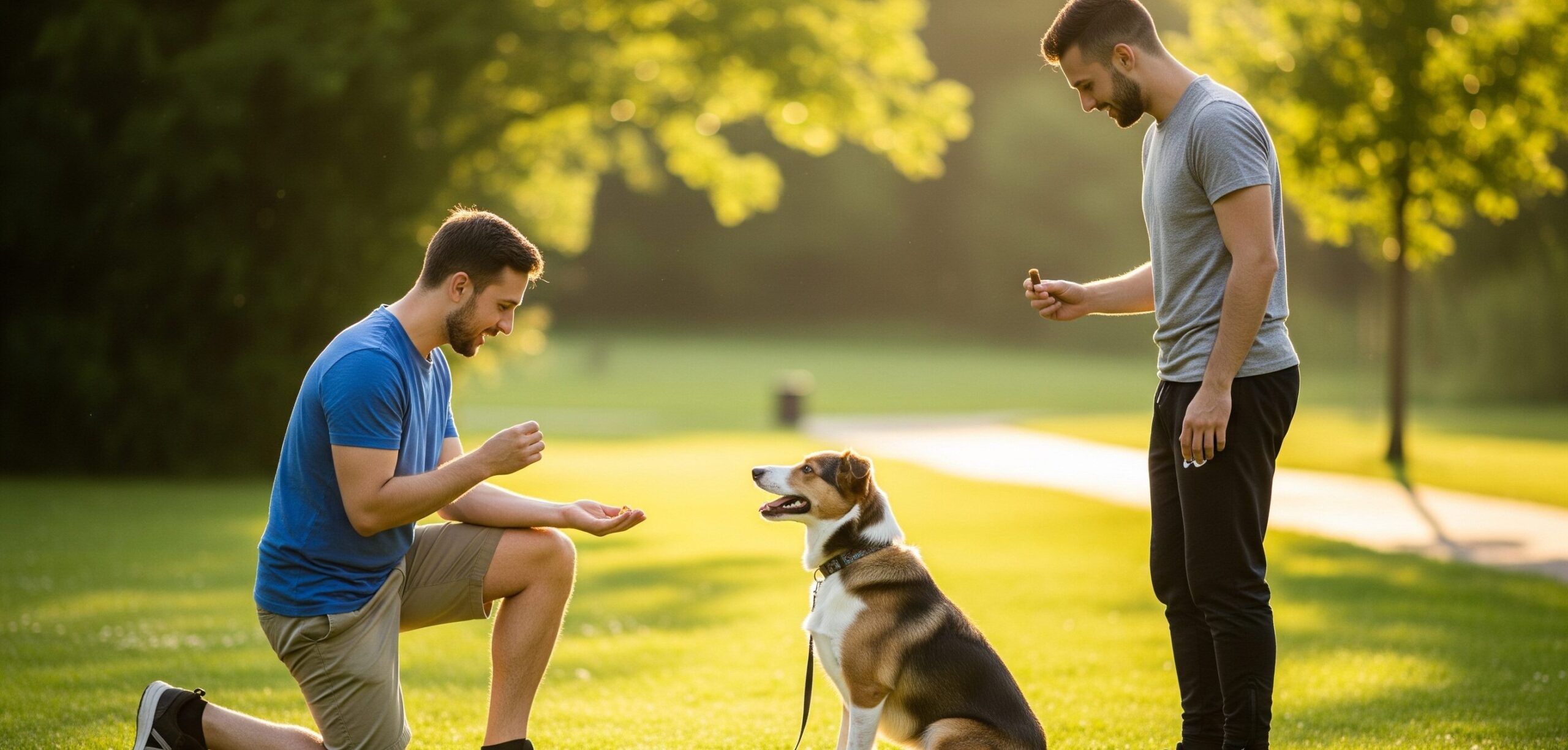
Document your dog’s progress, noting specific triggers, successful techniques, and areas needing improvement. This information helps you adjust training approaches and provides valuable data for professional trainers if needed.
When to Seek Veterinary Intervention
Some aggressive behaviors stem from medical issues rather than behavioural problems. Pain, hormonal imbalances, or neurological conditions can trigger sudden personality changes or increased irritability. Schedule a veterinary examination if your dog’s aggression:
- Appears suddenly without obvious triggers.
- Increases in intensity despite consistent training.
- Occurs alongside other behavioral changes.
- Involves biting or serious injury potential.
- Your veterinarian may recommend medication to reduce anxiety levels, making behavioral training more effective.
Creating Long-Term Success
Resolving dog-to-dog aggression requires patience, consistency, and realistic expectations. Most dogs show improvement within 4-6 weeks of consistent training, but complete behavior modification can take several months.
Celebrate small victories along the way. A dog that previously lunged at every other dog but now stares represents significant progress. Maintain training protocols even after improvement to prevent regression. It is essential to remember that management is a permanent part of responsible ownership, not merely a short-term solution. Even well-trained dogs may have off days or encounter situations that challenge their self-control.
Building Stronger Bonds Through Training
Working through aggression issues strengthens your relationship with your dog by improving communication and trust. Dogs whose aggressive behaviours are properly addressed often become more confident and relaxed in all areas of life.
The time invested in addressing dog-to-dog aggression pays dividends in reduced stress for both you and your pet. Peaceful walks, successful dog park visits, and the ability to have other dogs visit your home transform daily life with your canine companion.
Start implementing these expert-approved techniques today, beginning with the easiest strategies and gradually incorporating more advanced methods. Your dog’s aggressive behavior toward other dogs doesn’t define them-it’s simply a challenge you can overcome together with patience, consistency, and the right approach.
What is the most common cause of aggression in dogs?
The most common cause is fear. Dogs often use aggression, like growling or snapping, to create distance from something they fear.
How to improve aggressive behavior?
First, consult a professional behaviorist to identify the cause. Improvement involves management to prevent triggers and positive reinforcement training to change the dog’s emotional response. Never punish aggression.
What is the 3-3-3 rule with dogs?
The 3-3-3 rule describes the adjustment period for a newly adopted dog. It suggests: 3 days of feeling overwhelmed, 3 weeks of settling in and showing true personality, and 3 months to feel fully comfortable and bonded.
Can a dog be cured of aggression?
Aggression is typically managed and modified, not fully “cured.” With consistent training, management, and often medication, a dog’s behavior can be significantly improved and made safe.
What is a red flag dog’s behavior?
A red flag is any behavior indicating a high level of stress or potential escalation. Key examples include growling, snapping, a hard stare, “whale eye” (showing the whites of the eyes), or tensely freezing in place.
Is it the owners’ fault if a dog is aggressive?
Aggression is rarely just one person’s “fault.” It’s a complex interaction of genetics, early socialization, and environmental experiences. However, owners are responsible for managing the environment and seeking professional help.
What are the common triggers for aggression?
Common triggers include approaching when they are eating (resource guarding), touching a painful spot (pain-related), fear of strangers, and approaching while they are resting (startle or territoriality).
Read our new guides:
150+ Best German Shepherd Names: Strong. Unique & Cute Ideas
The Complete Guide to Puppy and Food: Everything New Owners Need to Know
Why Is My Dog Acting Weird? 9 Reasons Not to Ignore Strange Behavior
How to Take Care of a Dog: Complete Beginner’s Guide + 10 Expert Tips