
Why Is My Dog’s Leg Shaking? [Vet-Approved Guide]
Our blogs are well-researched and medically reviewed under editorial team. The information is sourced from trusted and accurate sites.
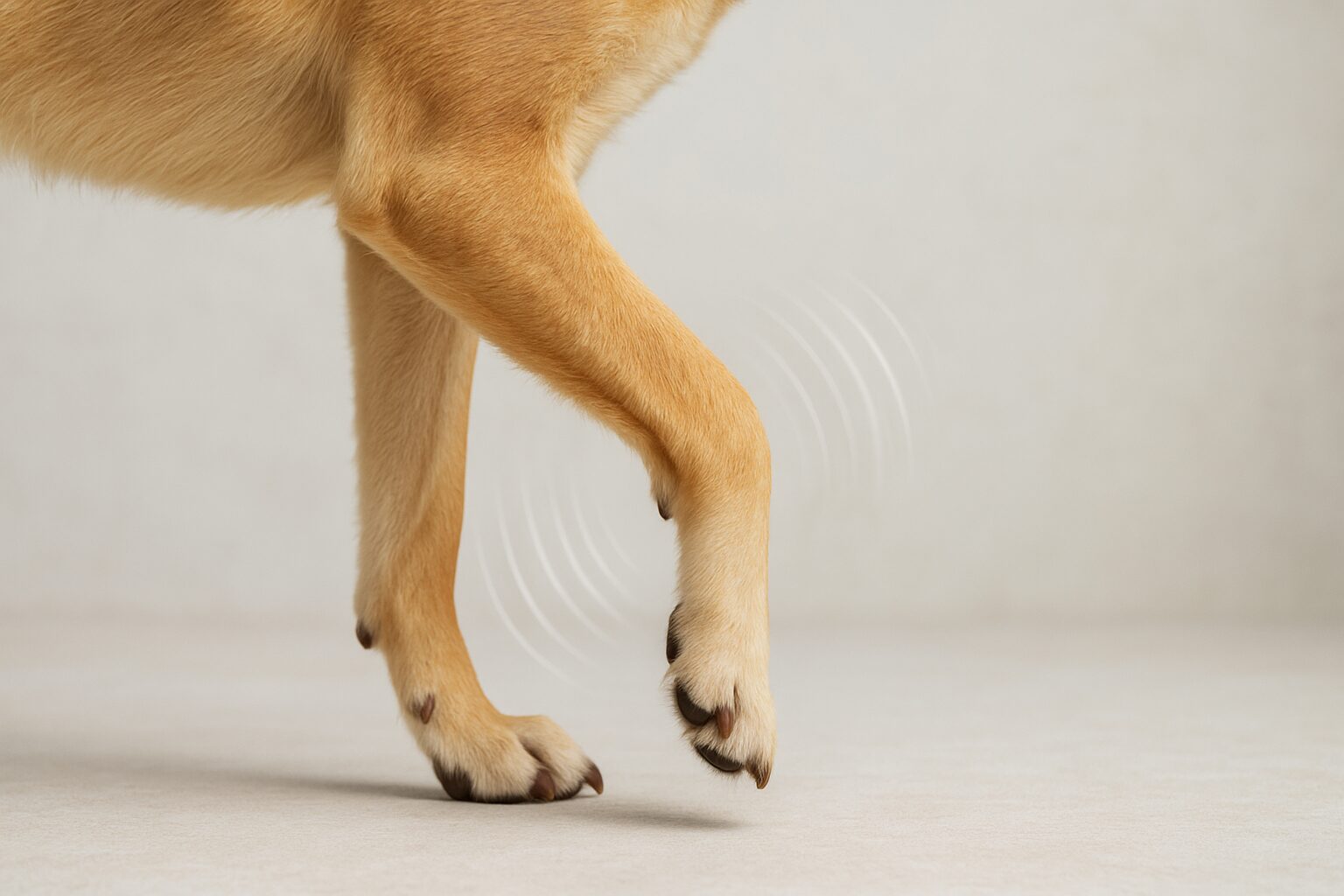
A 2024 study has shown that shaking in dogs is often caused by stress conditions or to relieve stress. It can also be related to posture conditions.
Whether you notice your dog’s back legs shaking while standing or a front paw trembling during rest time, understanding the reasons behind this behavior helps you provide the best care for your furry friend.
Dog leg shaking ranges from completely harmless to requiring immediate veterinary attention. This expert-approved guide walks you through the most common causes. This will help you to determine when to monitor at home and when to seek professional help.
🐶 Quick Answer & Immediate Action Checklist
Use this checklist for a fast answer about dog leg shaking and to assess the situation quickly.
| Quick Answer: When to Worry | Immediate Action Checklist |
| Most Often Harmless: Excitement, cold, or dreaming. | Examine: Check the leg and paw gently for visible injuries (thorns, cuts). |
| Call Vet Soon: Persistent shaking (over a few hours), limping, or reluctance to move. | Observe: Note when the shaking happens (at rest, standing, after exercise). |
| EMERGENCY Vet Visit: Severe tremors, seizures, vomiting, collapse, or suspected toxin ingestion. | Comfort: Offer a blanket if they seem cold; remove stressors if they seem anxious. |
🔎 Causes of Dog Leg Shaking: Quick Checklist
The primary causes of dog leg shaking fall into three main categories:
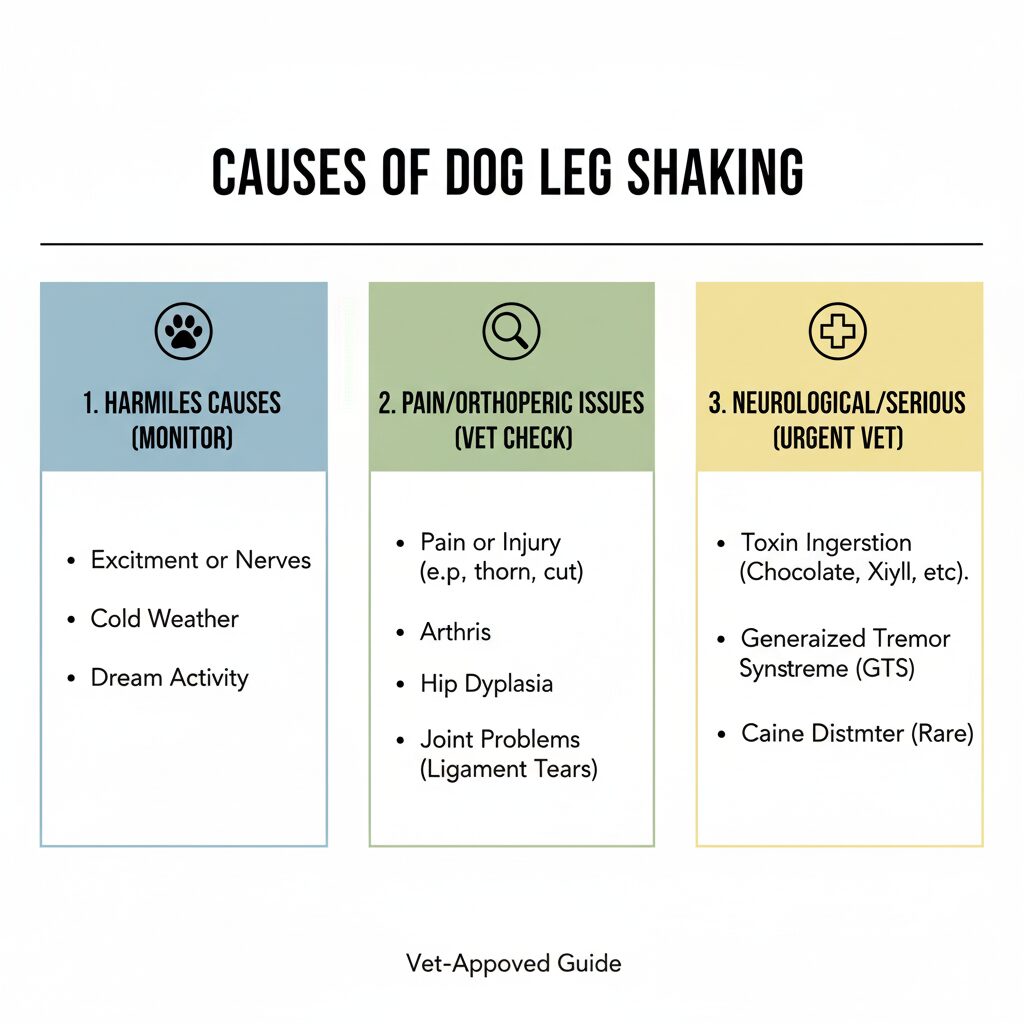
| Harmless Causes (Monitor) | Pain/Orthopedic Issues (Vet Check) | Neurological/Serious Issues (Urgent Vet) |
| Excitement or Nerves | Pain or Injury (e.g., thorn, cut, muscle strain) | Toxin Ingestion (Chocolate, Xylitol, etc.) |
| Cold Weather | Arthritis (especially in older dogs) | Generalized Tremor Syndrome (GTS) |
| Dream Activity (REM sleep twitching) | Hip Dysplasia | Canine Distemper (Rare, if vaccinated) |
| Joint Problems (Luxating Patella, Ligament Tears) |
Common (and Mostly Harmless) Reasons for Dog Leg Shaking
Not every instance of a dog’s leg shaking is a cause for panic. These common causes typically resolve on their own.
Read the dog shivering and panting guide.
Excitement or Nerves

Strong emotions often cause temporary leg trembling in dogs. You might notice your dog’s leg shaking when they hear the leash jingling. See you grab their favorite toy, or spot another dog approaching during walks. Anxiety-causing situations like thunderstorms or fireworks can also cause nervous tremors.
This shaking typically stops once the exciting or stressful situation passes.
Cold Weather

Small breeds, dogs with thin coats, and senior dogs often shiver when temperatures drop. This natural response helps generate body heat, similar to how humans shiver in cold conditions. Breeds like Chihuahuas, Greyhounds, and Whippets are particularly susceptible to cold-induced shaking.
Providing a warm blanket, moving your dog to a heated area, or using a dog sweater typically resolves temperature-related trembling quickly.
Dream Activity

Dogs experience REM sleep cycles just like humans, complete with vivid dreams. During deep sleep, you might observe your dog’s legs twitching, paddling motions, or gentle shaking as they “chase” something in their dreams. This sleep-related movement is completely normal and stops when your dog wakes up naturally.
When Dog Leg Shaking Might Signal a Problem
If the trembling is persistent, localised, or accompanied by other symptoms, it’s time to seek professional veterinary advice.
Pain or Injury
Localised dog leg shaking often indicates discomfort or pain in a specific area. Common causes include:
- Paw injuries: Thorns, cuts, or foreign objects stuck between toes.
- Muscle strains: Overexertion during play or exercise.
- Arthritis: Joint inflammation causing dogs’ back legs to shake, especially in older pets.
- Hip dysplasia: A Genetic condition affecting hip joint stability.
Dogs experiencing pain may also show additional symptoms like limping, reluctance to move, whimpering, or favoring one leg over another.
Generalized Tremor Syndrome (GTS)
Also known as “shaker syndrome,” GTS causes widespread tremors affecting the entire body or specific body parts. While more common in small, white breeds like Maltese and West Highland White Terriers, any dog can develop this condition.

GTS symptoms typically worsen with excitement or stress and improve during rest. The exact cause remains unknown, but veterinarians can successfully treat most cases with appropriate medication.
Toxin Ingestion

Several household items can cause muscle tremors and leg shaking when ingested by dogs:
- Chocolate: Contains theobromine, toxic to dogs.
- Xylitol: Artificial sweetener found in sugar-free gum and candy.
- Grapes and raisins: Can cause kidney failure.
- Certain houseplants: Azaleas, lilies, and sago palms are particularly dangerous.
If you suspect toxin ingestion, contact your veterinarian or pet poison control hotline immediately.
Joint Problems
Specific orthopedic conditions can cause persistent dog leg shaking:
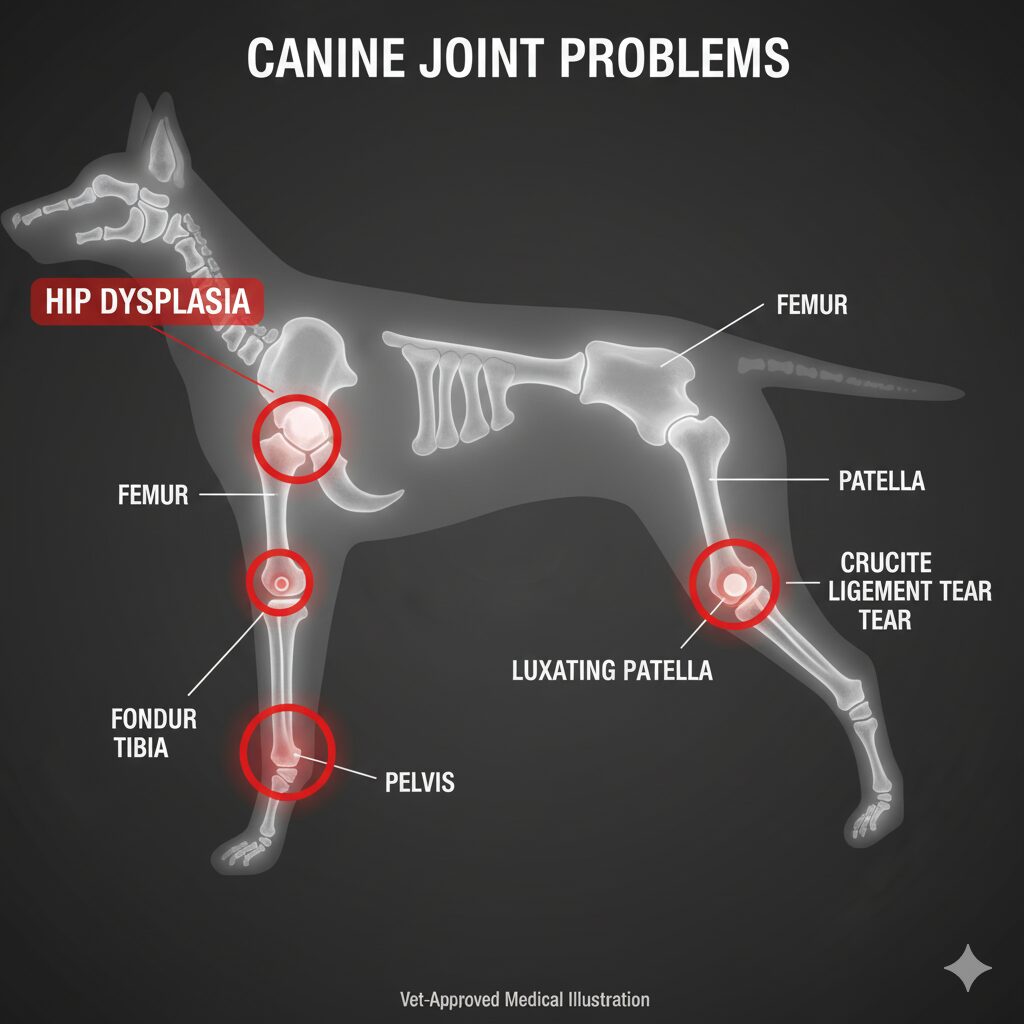
- Luxating patella: Kneecap dislocation is common in small breeds.
- Cruciate ligament injuriesDogs experience REM sleep cycles just like humans, complete with vivid dreams. During deep sleep, you might observe your dog’s legs twitching, paddling motions, or gentle shaking as they “chase” something in their dreams. This sleep-related movement is completely normal and stops when your dog wakes up naturally.
Special Body Scenarios About Dog Leg Shaking
Dogs’ Back Legs Shaking While Lying Down
Shaking while resting can be less common and may suggest underlying discomfort or
neurological issues.
- Pain/Discomfort: Your dog may be experiencing pain from a condition like arthritis or
hip dysplasia, and the shaking is an involuntary response or an effort to find a
comfortable position. - Neurological Conditions: Tremors at rest can sometimes be linked to problems
affecting the nerves or spinal cord, as the shaking isn’t a result of movement or
weight-bearing. - Generalized Tremor Syndrome (Shaker Syndrome): This condition can cause
whole-body tremors, which might be noticeable in the back legs even when lying down.
Dogs’ Back Legs Shaking While Standing
Shaking while standing often relates to stability, muscle strength, or pain in the joints or limbs.
- Weakness or Fatigue: Especially in senior dogs, the hind leg muscles may weaken
with age, leading to visible shaking as the dog strains to support its weight. - Arthritis or Joint Pain: Conditions like osteoarthritis or ligament injuries (e.g., in the
knee) can cause instability and pain, resulting in trembling in the affected leg when
weight is placed on it. - Excitement or Anxiety: Shaking can be a behavioral response to strong emotions like
high excitement or fear, which is often visible when the dog is standing still.
Dogs’ Front Legs Shaking When Sitting
Shaking in the front legs while sitting can also be due to emotional or physical causes,
sometimes focusing the tremor in the forelimbs.
- to ACL tears in humans.
- Elbow dysplasia: Developmental joint problems in larger breeds.
These conditions often cause intermittent shaking, especially when your dog bears weight on the affected leg.
Canine Distemper
This serious viral infection affects multiple body systems, with neurological symptoms like leg shaking appearing in advanced stages. Other warning signs include fever, coughing, nasal discharge, and behavioral changes.
Distemper is entirely preventable through regular vaccinations, making this another crucial reason to maintain your dog’s vaccination schedule.
What Should You Do When Your Dog’s Leg Is Shaking?
Taking systematic steps ensures you gather all the necessary information for your veterinarian.
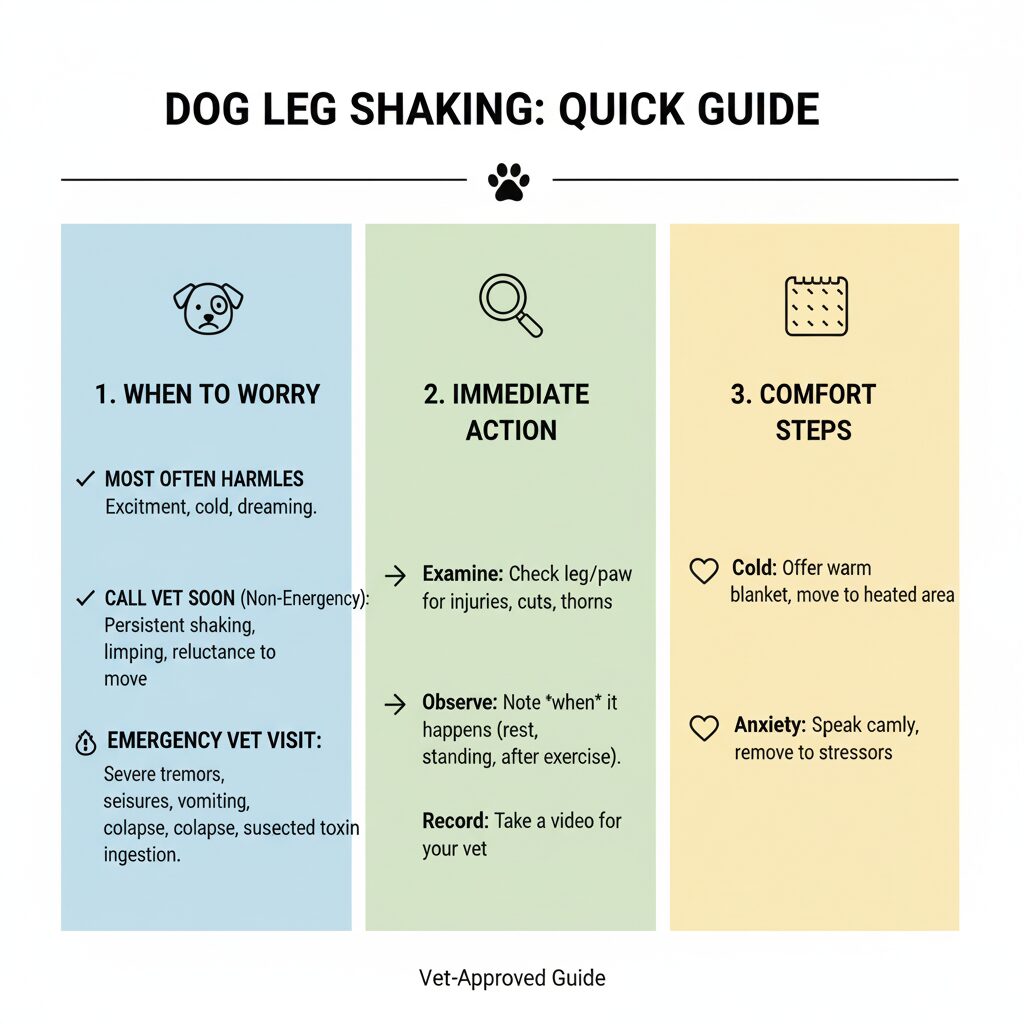
1. Observe Carefully
Document when the shaking occurs, which legs are affected, and any accompanying symptoms. Note whether the trembling happens during specific activities, times of day, or emotional states. This information helps veterinarians make accurate diagnoses.
2. Check for Obvious Issues
Gently examine your dog’s legs and paws for visible injuries, swelling, or foreign objects. Look between toes, check paw pads for cuts or thorns, and feel along the leg for any areas of heat or sensitivity. Stop immediately if your dog shows signs of pain or discomfort during examination.
3. Provide Comfort
If cold weather is the culprit, offer a warm blanket or move your dog to a heated room. For anxiety-related shaking, speak in calm, reassuring tones and remove any obvious stressors from the environment.
4. When to Call Your Veterinarian
Seek immediate veterinary attention if your dog’s leg shaking is:
- Persistent: Continuing for more than a few hours without improvement.
- Severe: Violent tremors that prevent normal movement.
- Accompanied by other symptoms: Seizures, loss of appetite, vomiting, or extreme lethargy.
- Affecting daily activities: Preventing your dog from walking, eating, or sleeping normally.
Trust your instincts as a dog owner. You know your pet’s normal behavior better than anyone, so don’t hesitate to consult professionals when something seems off.
Take Action for Your Dog’s Health
Understanding the various causes behind dog leg shaking empowers you to make informed decisions about your pet’s care. While excitement and cold weather often trigger harmless trembling, persistent shaking—especially in your dog’s back legs while standing—warrants veterinary evaluation.
Remember that early intervention often leads to better outcomes for treatable conditions. By staying observant and working with your veterinarian, you’re taking the essential steps to ensure your dog’s continued health and happiness.