A Feeding Guide for Your Great Dane by Age
Our blogs are well-researched and medically reviewed under editorial team. The information is sourced from trusted and accurate sites.
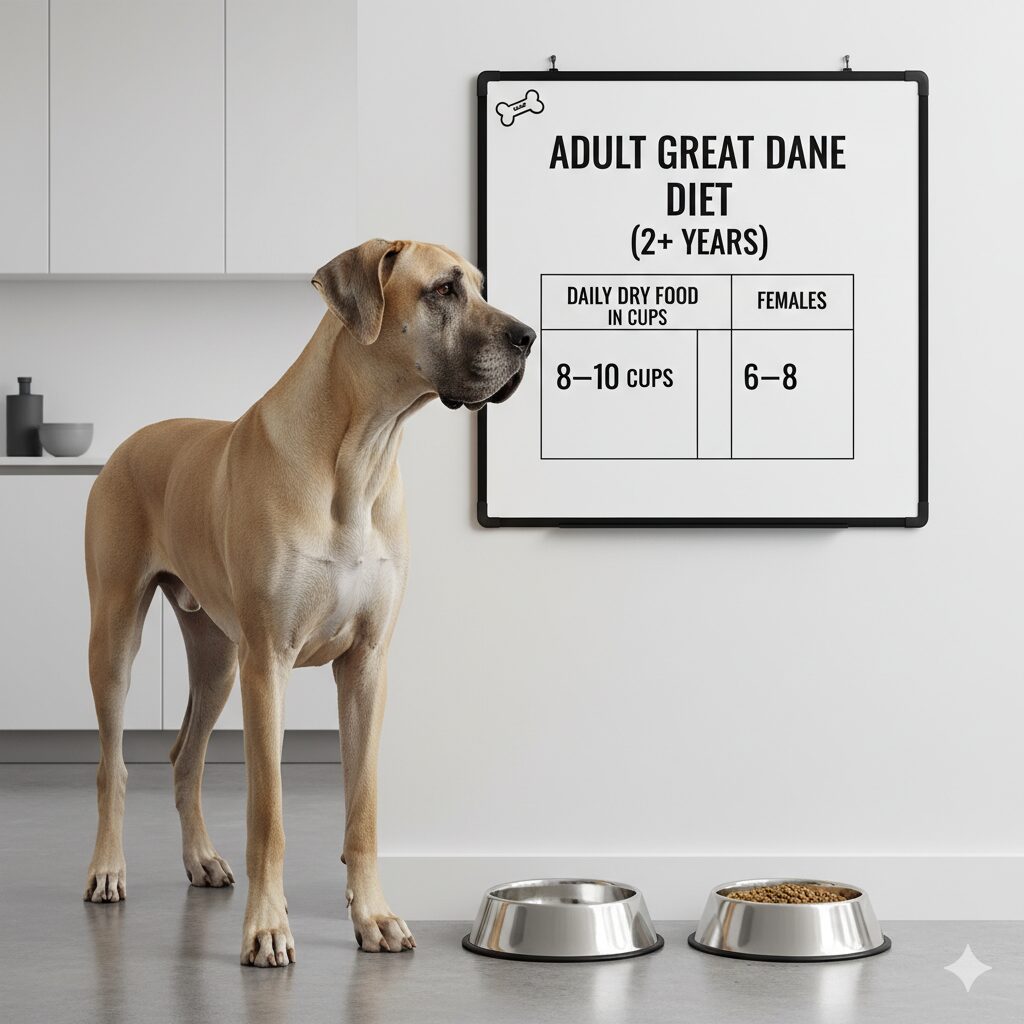
A Great Dane’s food intake depends on age, weight, and gender.
- Puppies (2–8 months): Feed 7–10% of body weight daily (3–4 meals).
- Adolescents (8–18 months): Feed 3–4% of body weight daily (2–3 meals).
- Adults (2+ years): Feed 2–3% of ideal body weight daily (2 meals).
That means an adult male Great Dane usually eats 8–10 cups per day, while a female Great Dane eats 6–8 cups depending on activity level.
This Great Dane feeding chart by age is designed to give you complete confidence in your dog’s nutrition, built on real veterinary guidance, healthy growth principles, and verified feeding.
Great Danes are truly gentle giants. Their impressive size and sweet nature capture hearts, but their stature also brings up important questions about their diet. How much food should a Great Dane eat to support its massive frame?
Proper nutrition is vital, especially given their rapid growth as puppies. An incorrect diet can lead to serious health issues down the line.
This guide provides a comprehensive Great Dane feeding chart by age, designed to help you navigate their dietary needs from playful puppyhood to dignified adulthood.
We’ll explore how much to feed your Great Dane at different life stages, cover the nutritional differences between males and females, and explain what to look for in high-quality dog food. With this information, you can feel confident you’re giving your gentle giant the best possible start for a long, healthy life.
The Great Dane Puppy Growth Spurt: 2 to 8 Months

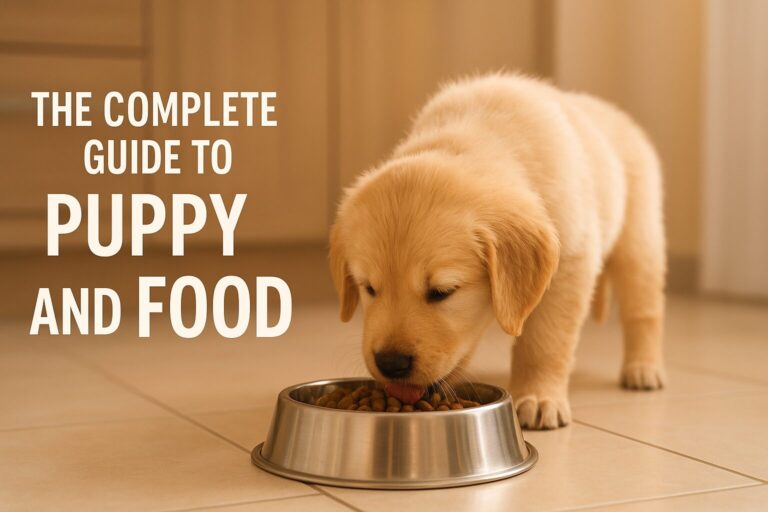
The period between two and eight months is a time of incredible growth for a Great Dane puppy. Proper nutrition during these early months is critical for healthy bone and joint development.
For giant breeds, overfeeding is a significant risk. If they grow too quickly, it can put immense strain on their developing skeletal system, leading to lifelong orthopedic problems.
The goal is lean growth. A Great Dane puppy should not be chubby; it’s normal and healthy to see a hint of their ribs. To prevent issues like bloat—a life-threatening condition common in deep-chested breeds—it’s essential to split their daily food intake into three or four smaller meals. Avoid vigorous play for at least an hour before and after feeding times.
Are you feeding your dog enough? Read the answer.
How Much to Feed a Great Dane Puppy Chart
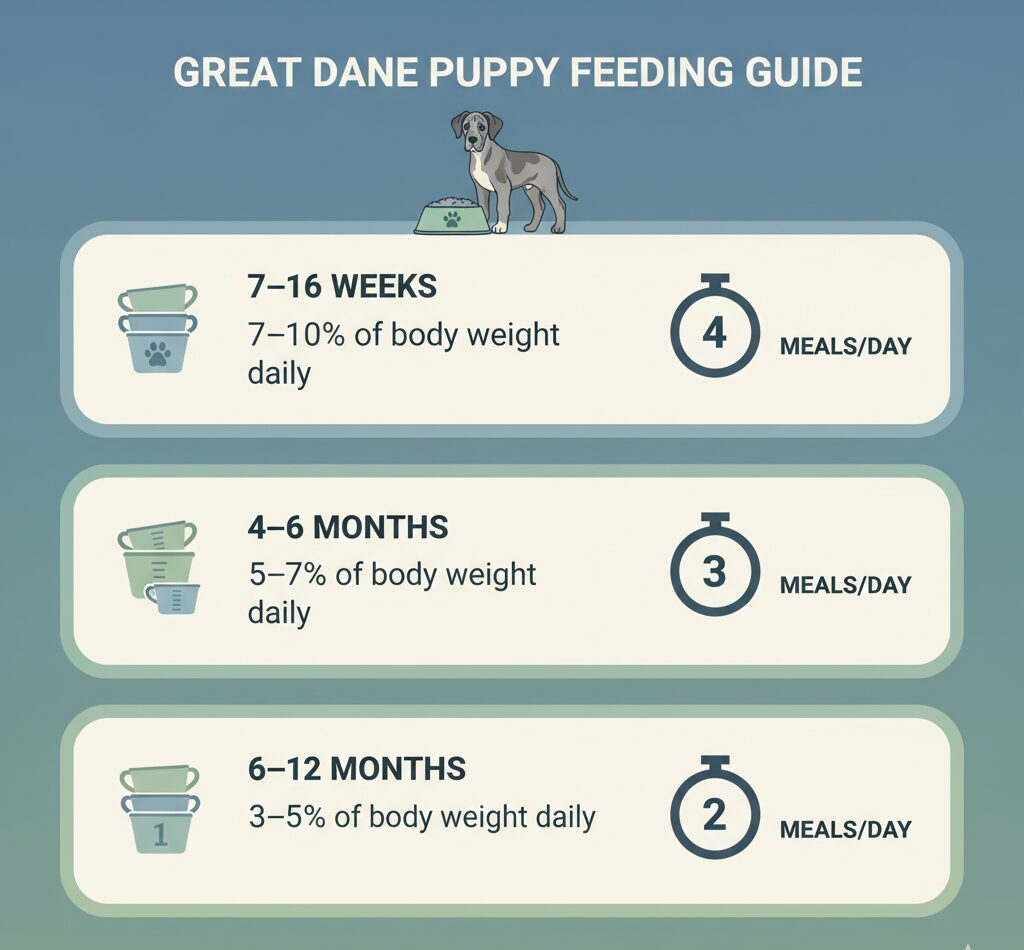
A common way to calculate food portions for a growing puppy is by using their body weight. Here is a Great Dane puppy feeding chart based on age and weight percentage:
- 7–16 weeks: Feed 7–10% of their body weight daily.
- 4–6 months: Feed 5–7% of their body weight daily.
- 6–8 months: Feed 4–5% of their body weight daily.
Remember to divide this total daily amount into 3-4 separate meals.
Is one cup of food enough for a puppy? Click here to learn.
Feeding a Male vs. Female Great Dane Puppy
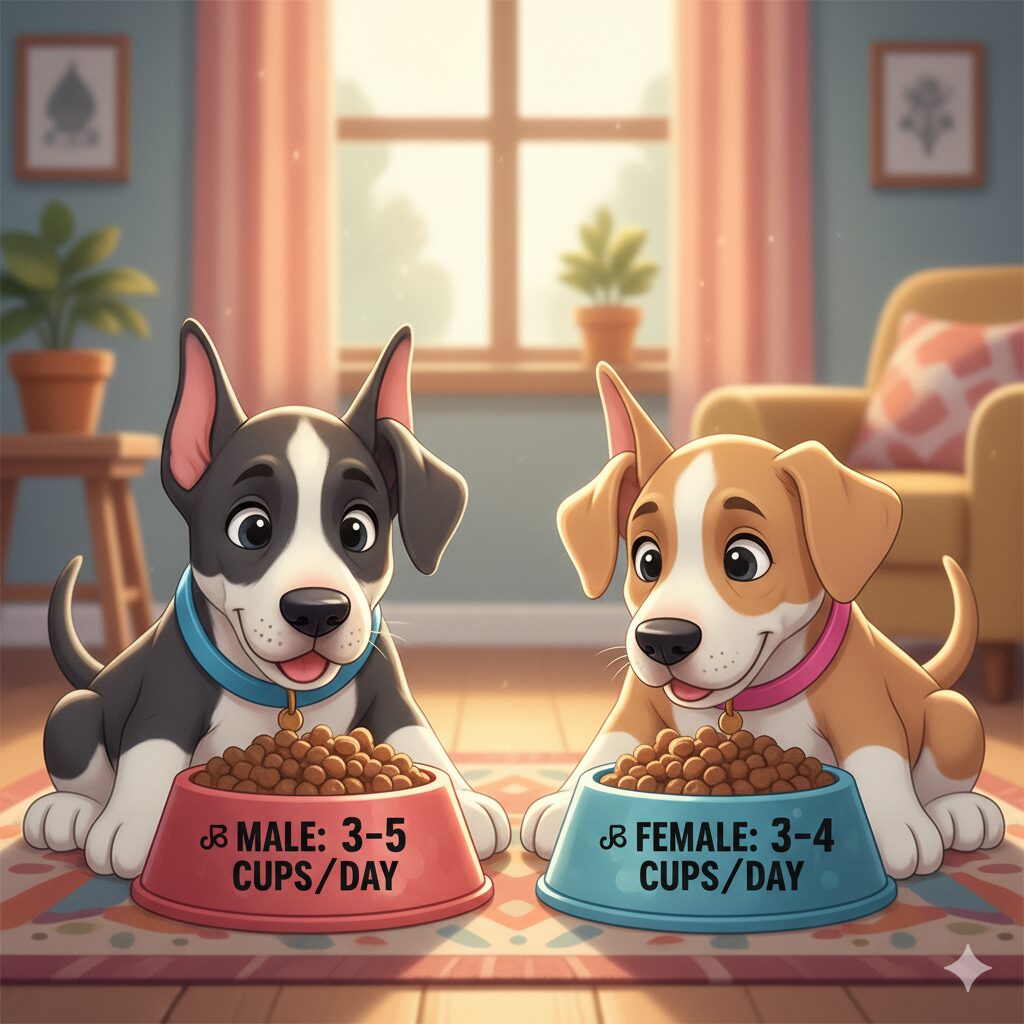
Male Great Danes are typically larger than females and naturally have slightly higher caloric needs. While a body-weight percentage is more accurate, a cup-based guide can also be helpful for quick reference. Generally, male puppies will be at the higher end of any recommended feeding range.
Here is a simple cup-based estimate for a 12-week-old puppy:
- Male Puppy (12 weeks): 3–5 cups daily.
- Female Puppy (12 weeks): 3–4 cups daily.
These figures are only a guideline. The most important thing is to monitor your puppy’s body condition. Adjust their food intake based on their energy levels, growth, and whether they appear too lean or are gaining excess weight.
Transitioning to Adulthood: 8 Months to 2 Years

After eight months, a Great Dane’s rapid growth rate begins to slow. As they approach their full adult size, their caloric needs relative to their body weight will gradually decrease. You can also start reducing their meals from three or four per day to just two.
Here is an updated feeding chart for this transitional period:
- 8–12 months: Feed 3–4% of their body weight daily.
- 12–18 months: Feed 2.5–3.5% of their body weight daily.
Continue to monitor their body condition closely. If they start gaining too much weight, reduce their portion size slightly.
The Adult Great Dane Diet: 2+ Years
Once your Great Dane reaches two years of age, they are considered a full adult. Their diet should now focus on maintenance rather than growth. An adult Great Dane should be fed approximately 2-3% of their ideal body weight each day, split into two meals to reduce the risk of bloat.
Read how to take care of a dog.
Adult Great Dane Feeding Chart
Here are the typical daily food amounts for adult Great Danes in cups:
- Adult Males: 8–10 cups daily.
- Adult Females: 6–8 cups daily.
So, how much should a 3-year-old Great Dane eat? A three-year-old falls squarely into the adult category. Depending on its sex, metabolism, and activity level, it will require between 6 and 10 cups of food per day. Active dogs may need more, while less active or senior dogs may need less to maintain a healthy weight.
For our readers in Australia, the feeding principles remain the same. However, the specific brands of dog food available will differ. It’s always best to consult with a local veterinarian who can recommend high-quality, AAFCO-approved brands available in your area that meet the nutritional needs of a giant breed.
What Makes a Good Great Dane Food?
Choosing the right food is just as important as feeding the right amount. Great Danes have specific nutritional requirements due to their size.
Protein and Fat
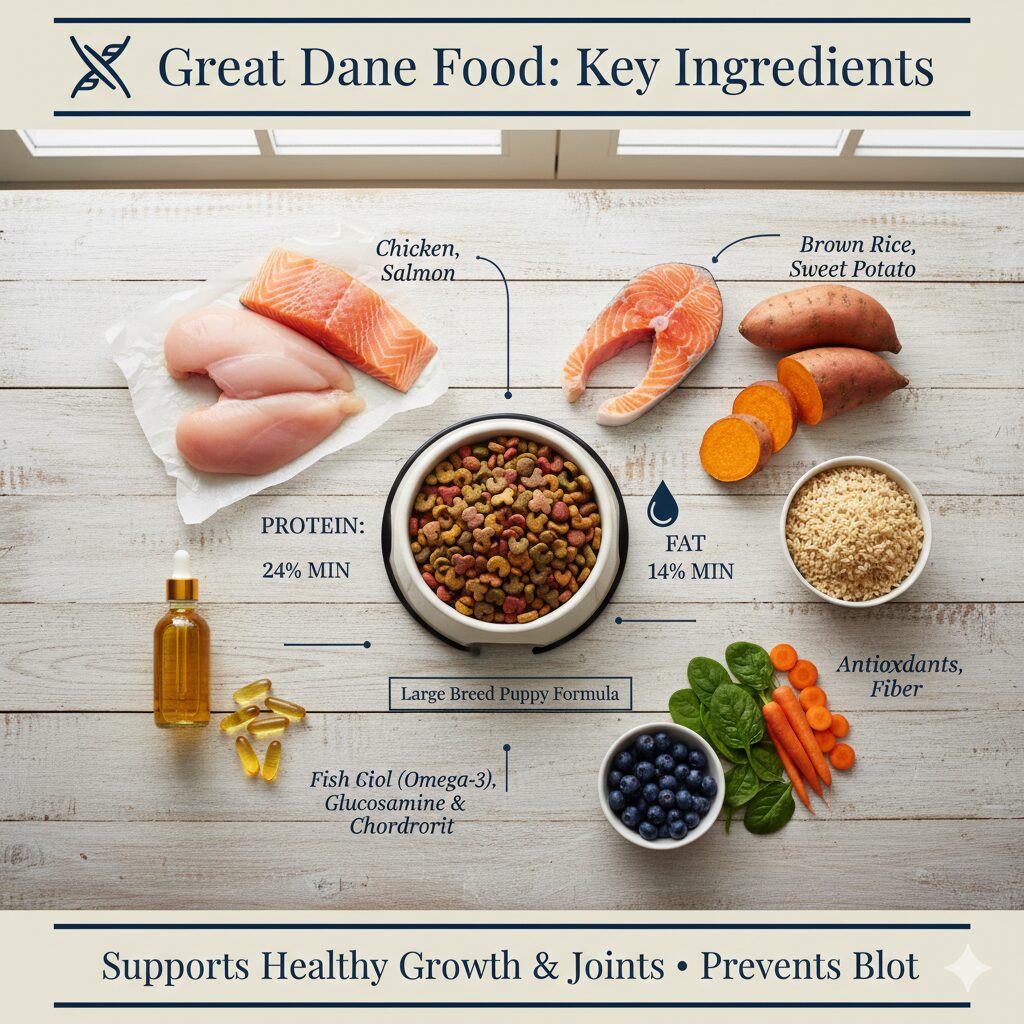
Look for a high-quality large or giant breed puppy formula that contains a minimum of 23% protein and 12% fat. The primary ingredients should be from high-quality animal sources like chicken, salmon, or beef.
Calcium and Phosphorus
The balance of calcium and phosphorus is crucial for a growing Great Dane. An imbalanced ratio can cause severe developmental orthopedic diseases. The ideal ratio is approximately 1.2:1 (calcium to phosphorus). Large-breed puppy foods are specifically formulated to maintain this balance. Never supplement a Great Dane puppy’s diet with extra calcium, as this can be dangerous and disruptive to their development.
Ingredients to Look For
- High-quality animal protein as the first ingredient (e.g., chicken, salmon meal).
- Healthy fats like fish oil, which provide omega fatty acids for skin and coat health.
- Grain-inclusive formulas are often recommended, as they are less likely to contain high levels of peas and legumes that can disrupt amino acid balance.
Ingredients to Avoid
- Generic “meat” by-products without a specified source.
- Artificial fillers, colours, and preservatives.
- High levels of legumes (peas, lentils) and potatoes, which are often used as fillers in grain-free formulas.
A Healthy Dane is a Happy Dane
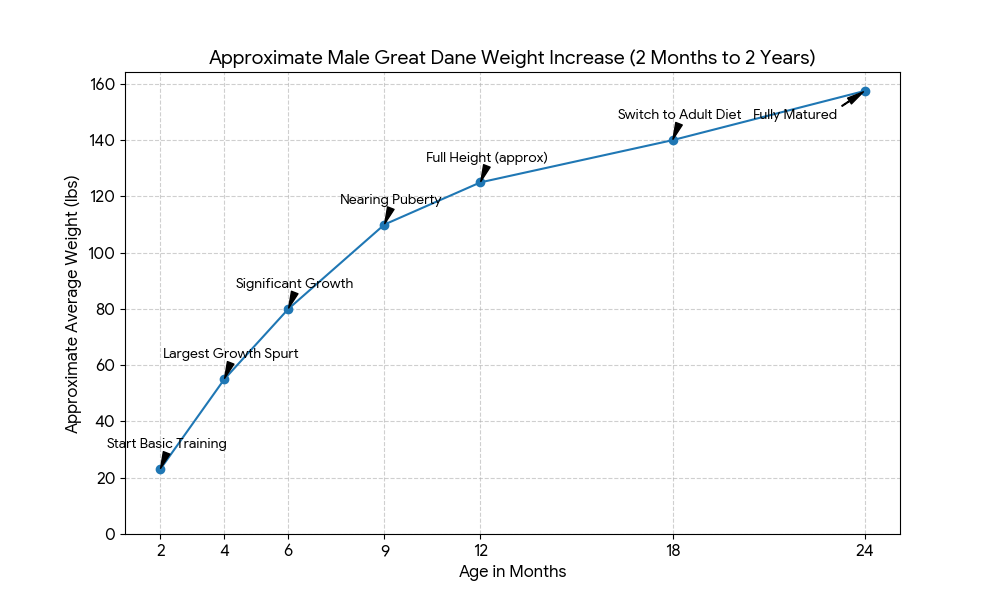
Feeding your Great Dane correctly is one of the most significant contributions you can make to their long-term health and happiness. The key takeaways are to practice strict portion control, especially during their rapid puppy growth phase, and to prioritize a lean body condition. Always monitor your dog’s individual needs rather than sticking rigidly to a chart, and choose a high-quality food formulated for giant breeds.
While this guide provides a solid foundation, every dog is an individual. We strongly encourage you to consult your veterinarian to create a personalized feeding plan that perfectly suits your unique and wonderful Great Dane.
Are you dealing with dog behaviour problems? Please read our guide.