Why Does My Dog Eat Everything and How to Stop It?
Our blogs are well-researched and medically reviewed under editorial team. The information is sourced from trusted and accurate sites.
Quick Answer: Why Your Dog Eats Everything
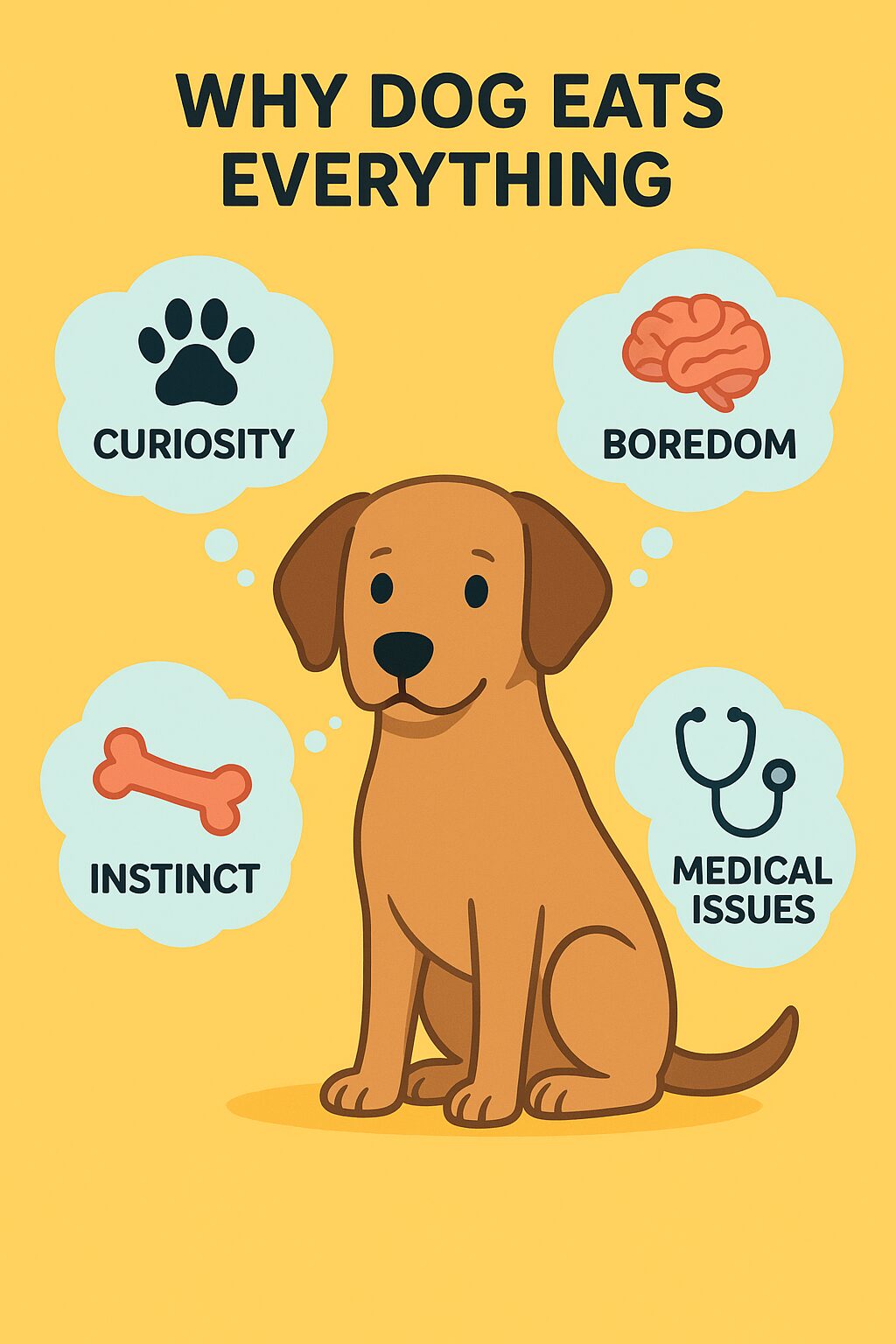
Here are the following four root causes that’s why your dog eats everything:
Specific Example: Puppy teething and investigation.
Solution Focus: Management — Puppy-proof environment; provide appropriate chew toys.
Specific Example: Boredom, attention-seeking, or separation anxiety.
Solution Focus: Enrichment — Increase exercise and mental stimulation (puzzle feeders, training).
Specific Example: Natural scavenging drive (e.g., eating scraps off the ground).
Solution Focus: Training — Master the “Leave It” and “Drop It” commands.
Specific Example: Craving non-food items like rocks, dirt, or fabric.
Solution Focus: Veterinarian — Rule out nutritional deficiencies, diabetes, or GI issues with a full check-up.
Understanding Indiscriminate Eating in Dogs
You turn your back for three seconds to grab a glass of water, and your favourite sock has vanished. It’s a classic scenario for dog owners: the guilty, yet satisfied, expression of a canine who has treated the world like an all-you-can-eat buffet.
While most owners accept that dogs are natural scavengers, there is a distinct difference between a dog that loves treats and one that consumes drywall, plastic, or rocks. Indiscriminate eating can range from a quirky annoyance to a sign of serious behavioural or medical issues.
This guide explores the root causes of this behaviour, from simple puppy curiosity to conditions like Pica. It provides actionable tips on how to stop your dog from turning your home into a snack bar.
I. Developmental Reasons: Why Do Puppies Eat Everything?

If you have a young dog, you might feel like you are living with a land shark. When a puppy eats everything in sight, it is often an investigation rather than hunger.
- Oral Exploration: Just as human babies grab and touch everything to learn, puppies chew and taste to understand texture and object permanence. They are literally trying to determine what is food and what is a toy.
- Teething Pain: Between three and six months of age, puppies lose their baby teeth. The pain and pressure in their gums make chewing highly soothing.
⚠️ Vigilance is Key: Allowing a puppy to shred and swallow items now can establish dangerous habits for the future. It is vital to distinguish between normal puppy curiosity and early signs of compulsive ingestion.
II. Behavioural & Instinctual Causes
Sometimes, the answer to “why does my dog eat everything” lies in their instinct and environment.
1. Instinct: The Opportunistic Scavenger
Dogs are hardwired to be opportunistic scavengers. In the wild, passing up a potential calorie source could mean starvation. This helps explain why “my dog eats everything off the ground” during walks; their instincts are screaming that the discarded sandwich crust on the sidewalk is a valuable prize.
2. Boredom and Attention Seeking

Domestic dogs often eat non-food items simply because they have nothing better to do.
- Lack of Stimulation: If a high-energy dog is left alone without mental stimulation, they will create their own entertainment—often involving destroying and eating a couch cushion.
- A Learned Habit: Dogs are masters of observation. If they notice that you jump up and chase them every time they grab a shoe, they learn that stealing shoes is a great way to get your attention. Even negative attention (like scolding) is better than no attention at all.
3. Stress and Anxiety
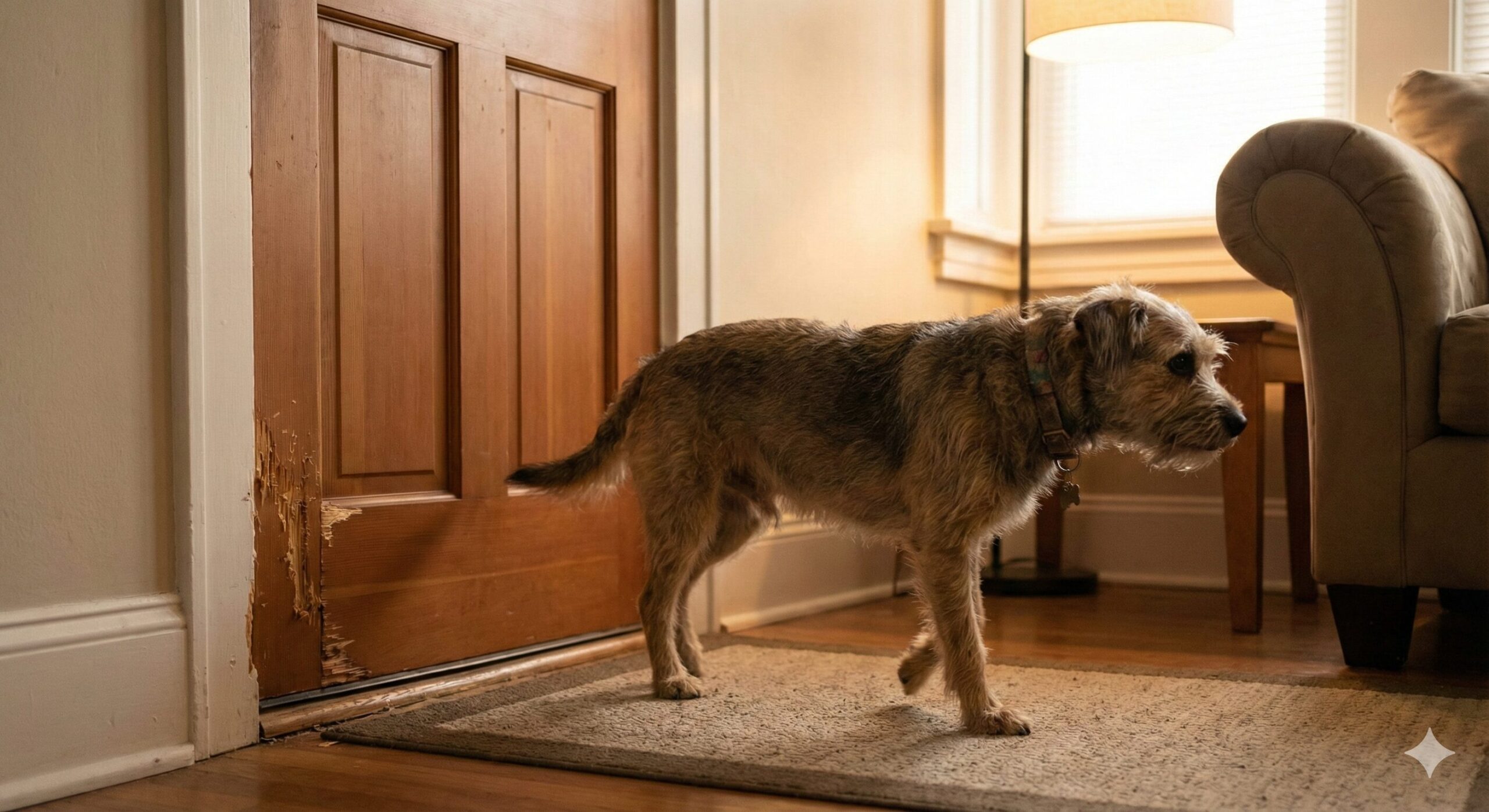
Anxiety is a major driver of destructive eating.
- Self-Soothing: Chewing and licking release endorphins in a dog’s brain, which provide a calming effect.
- Separation Anxiety: A dog suffering from separation anxiety may eat door frames or blinds in a frantic attempt to self-soothe or escape. If your dog eats anything and everything, specifically when you leave the house, anxiety is the likely culprit.
III. Medical Causes: Understanding Pica in Dogs

Before you assume your dog is just being naughty, it is crucial to rule out medical issues. A condition known as Pica in dogs causes them to crave and ingest non-food items such as dirt, rocks, faeces, metal, or fabric.
Several underlying problems can trigger pica:
- Nutritional Deficiencies: If a dog isn’t getting enough vitamins or minerals from their diet, they may instinctively try to source them from odd places, such as eating dirt or drywall.
- Polyphagia (Excessive Appetite): Conditions like diabetes or thyroid issues can prevent a dog’s body from properly absorbing nutrients, leaving them ravenous. This leads to a dog that eats everything in sight because they essentially feels they is starving.
- Gastrointestinal Issues: Occasionally, an owner will note, “My dog eats everything and then throws up.” Some dogs eat grass or fabric to induce vomiting intentionally to soothe an upset stomach or acid reflux.
The Complete Guide to Puppy and Food: Everything New Owners Need to Know
IV. Specific Scenarios and Risks
The habit of indiscriminate eating manifests in different ways, each with its own set of risks.
Scenario: Dog Eats Toys
Description & Risk:
The danger arises when a dog eats fabric, plastic, or rubber instead of just destroying it.
Risk: Life-threatening intestinal blockages requiring emergency surgery.
Scenario: The “Sidewalk Buffet”
Description & Risk:
A daily challenge during walks. Common hazards include cigarette butts, discarded gum
(often containing Xylitol, which is toxic), and chicken bones.
Scenario: Coprophagia (Eating Faeces)
Description & Risk:
The technical term for eating poop. This is shockingly common and can be linked to
nutritional deficits, but often, it is simply a scavenging habit that needs to be broken.
V. How Can I Stop My Dog From Eating Everything? (5-Step Action Plan)
Resolving this issue requires a mix of management, training, and medical clearance.
1. Start with a Vet Check
Because Pica and other metabolic diseases can drive this behavior, you cannot train the problem away if the root cause is medical. A full blood panel and fecal exam can rule out parasites, diabetes, and nutritional deficiencies.
2. Management and Prevention (Dog-Proofing)
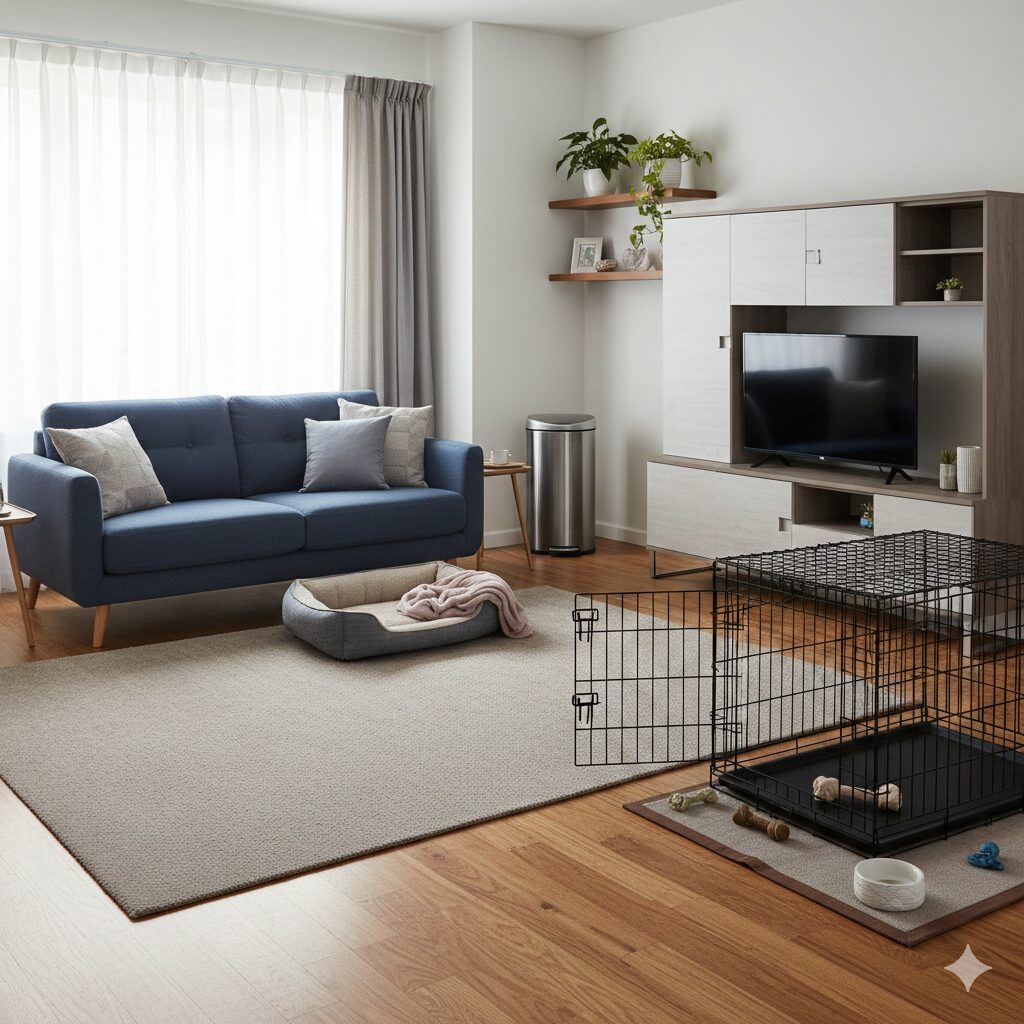
Until your dog is trained, you must manage their environment to keep them safe. Puppy-proof the house, regardless of the dog’s age.
- Keep floors clear of socks, toys, and small objects.
- Invest in trash cans with locking lids to prevent dumpster diving.
- Keep laundry and shoes behind closed doors.
- Crate training is the safest solution to prevent unsupervised ingestion of dangerous items.
3. Essential Training Commands
Two commands are critical for the safety of a scavenging dog. Mastering them is non-negotiable.
- “Leave It”: Tells the dog to ignore something they haven’t picked up yet. Practice rewarding them heavily when they look away from the low-value treat. This is your first line of defence against the sidewalk buffet.
- “Drop It”: For when they already have the forbidden item. Never chase your dog, as this turns it into a game. Instead, trade them for a high-value treat (like a piece of cheese or meat).
4. Enrichment and Exercise
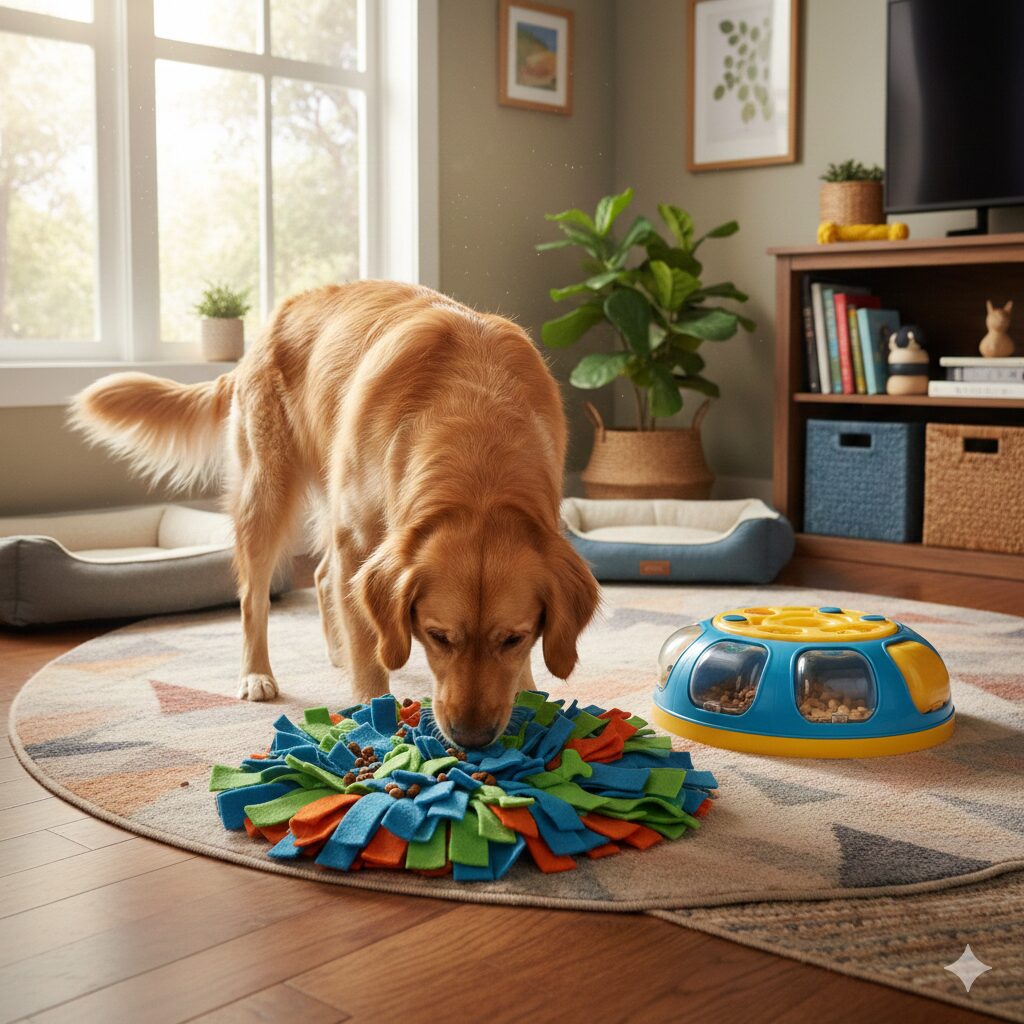
A tired dog is a good dog. Combat boredom by satisfying their foraging instinct safely.
- Ditch the Bowl: Use puzzle feeders or slow feeders for meals. This forces the dog to use their brain to get their food.
- Provide Appropriate Chews: Offer durable chew toys that are designated for gnawing to keep their jaws busy on safe, acceptable items.
5. Consider Muzzle Training for Walks
If your dog is a compulsive scavenger on walks, a basket muzzle is a fantastic safety tool.
- A basket muzzle allows the dog to pant, drink, and accept treats, but its design prevents them from picking up and ingesting items off the ground.
- It is not a punishment; it is a way to ensure safety while you work on training “how to get a dog to stop eating everything outside.”
Conclusion: From Scavenger to Well-Mannered Pup
Determining exactly why your dog eats everything—whether it is boredom, biology, or a medical need—is the first step toward a safer home. While it can be frustrating to monitor your four-legged friend constantly, remember that this behaviour is often manageable with consistency.
Patience is key. If you feel overwhelmed or if the behaviour puts your dog in immediate danger, do not hesitate to consult a certified dog trainer. With the right approach, you can turn your vacuum cleaner back into a dog.