Aggressive Puppy Behavior: Training Solutions Every Owner Should Know
Our blogs are well-researched and medically reviewed under editorial team. The information is sourced from trusted and accurate sites.
 Correcting Aggressive Puppy Behavior
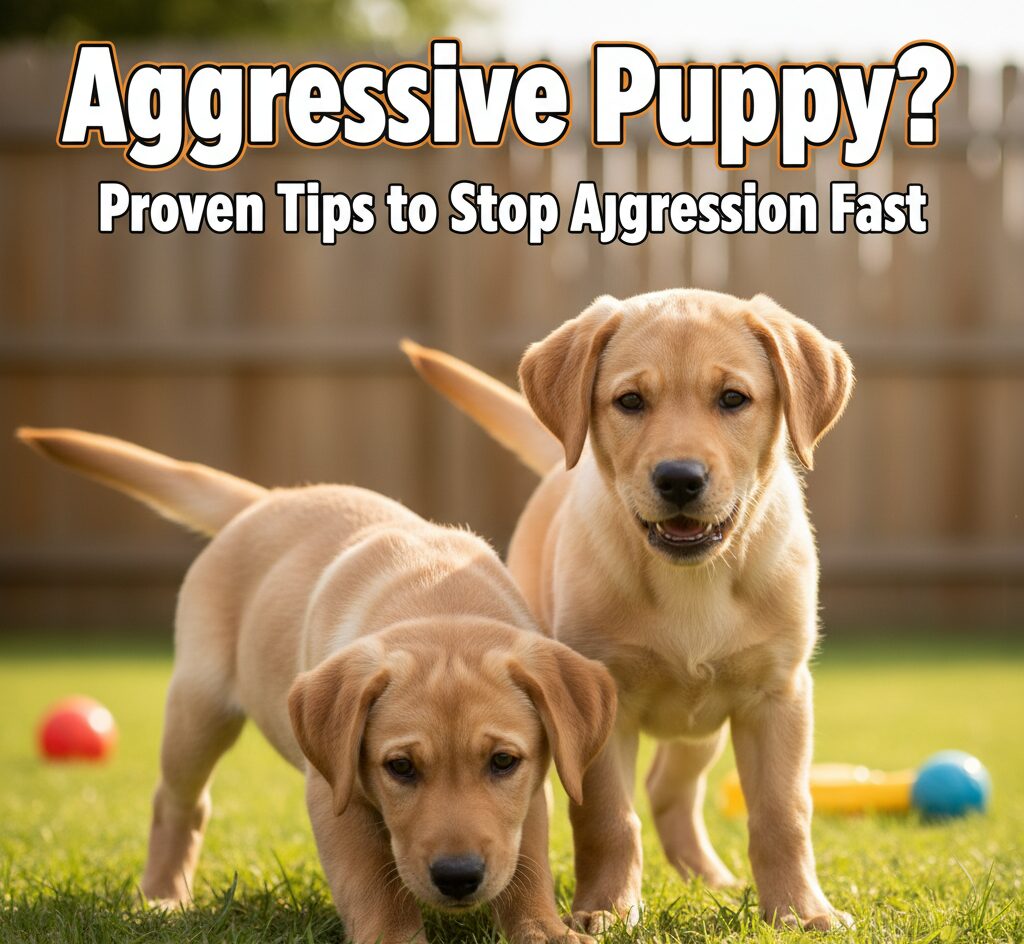 Correcting Aggressive Puppy Behavior
- Assess the Behavior: Is it true aggression or normal puppy play?
- True Aggression: Stiff body, hard stare, deep growling, snarling, forceful biting.
- Normal Play: Loose body, play bows, high-pitched growls, soft mouthing.
- Identify the Trigger: What is causing the behavior (Resource Guarding, Fear, Pain)?
- Manage the Environment for Safety:
- Avoid Triggers: Temporarily keep your puppy away from known trigger situations.
- Create Safe Zones: Use gates or a crate for a calm retreat space.
- Supervise All Interactions, especially with children or other pets.
- Implement Positive Training Techniques:
- Redirect Immediately: Use a firm “No!” and divert attention to an appropriate chew toy.
- Use Time-Outs: Calmly remove your puppy for a brief “reset” in a crate or separate room.
- Practice “Leave It” and “Drop It”: Essential commands for impulse control.
- Counter-Conditioning: Pair triggers with high-value rewards from a safe distance.
- Reward Calmness: Praise and reward quiet, relaxed behavior.
- Consider Professional Help: Contact a veterinary behaviorist (DACVB) if aggression is severe or unpredictable.
Can Puppies Actually Be Aggressive?
Yes, puppies can display aggressive behaviors, but it’s important to distinguish between normal developmental stages and true aggression.
Behaviors like nipping and mouthing are how puppies explore the world and learn bite inhibition. They often engage in rough-and-tumble play with their littermates, which can look intense.
True puppy aggression, however, is more serious and typically emerges between 6 to 18 months of age as they mature. This behavior is often rooted in fear, resource guarding, or a lack of socialization, rather than a desire to dominate.
A truly aggressive puppy will show specific body language and vocalizations that are different from playful antics. Recognizing these signs early is key to addressing the root cause before it becomes a more significant problem.
Warning Signs: Is It Normal Play or Aggression?
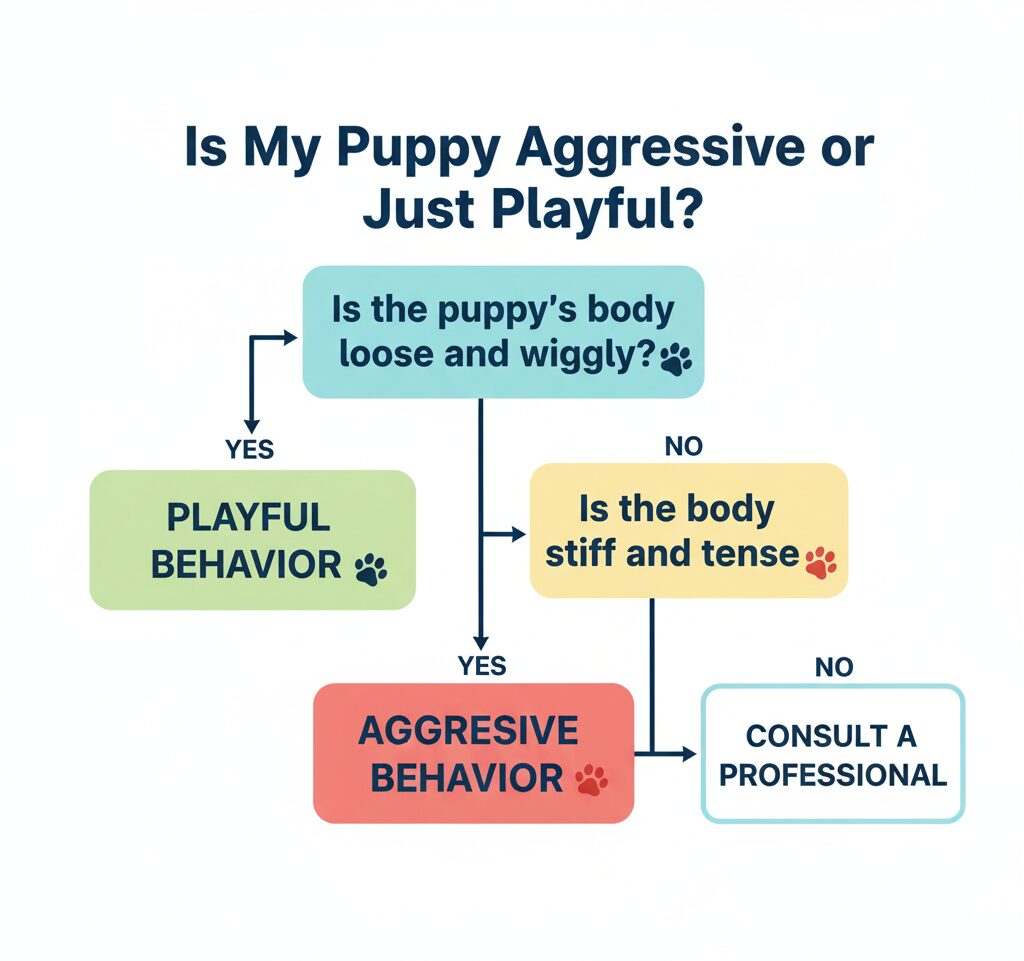
Telling the difference between a playful pup and an aggressive one can be tricky. A happy, playing puppy will have loose, wiggly body language and might even do a “play bow” (their front end down and rear end in the air). An aggressive puppy, on the other hand, will appear stiff and rigid.
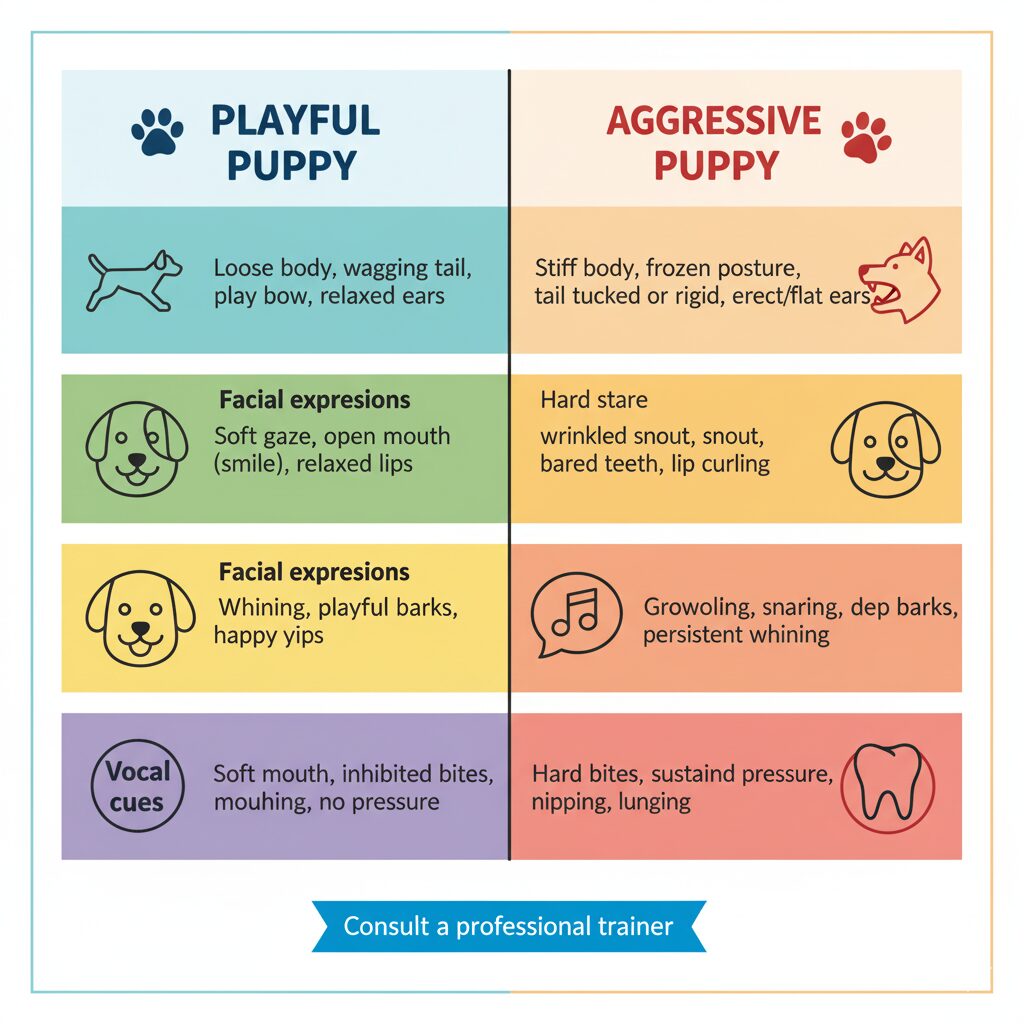
Here’s a chart to help you spot the difference:
| Behavior | Playful Puppy | Aggressive Puppy |
| Body Language | Loose, wiggly, relaxed. Does play bows. | Stiff, tense, freezes. Raised hackles (fur on back). |
| Facial Expression | Soft eyes, relaxed mouth, might “smile.” | Hard stare, lips curled back to show teeth, snarling. |
| Vocal Cues | Higher-pitched play growls, happy barks, yips. | Deep, low-pitched growling or snarling. |
| Biting | Soft mouthing, nips that don’t break skin. Stops if you yelp. | Hard, forceful bites that cause pain or break skin. Won’t let go. |
Why Is My Puppy So Aggressive? Common Triggers
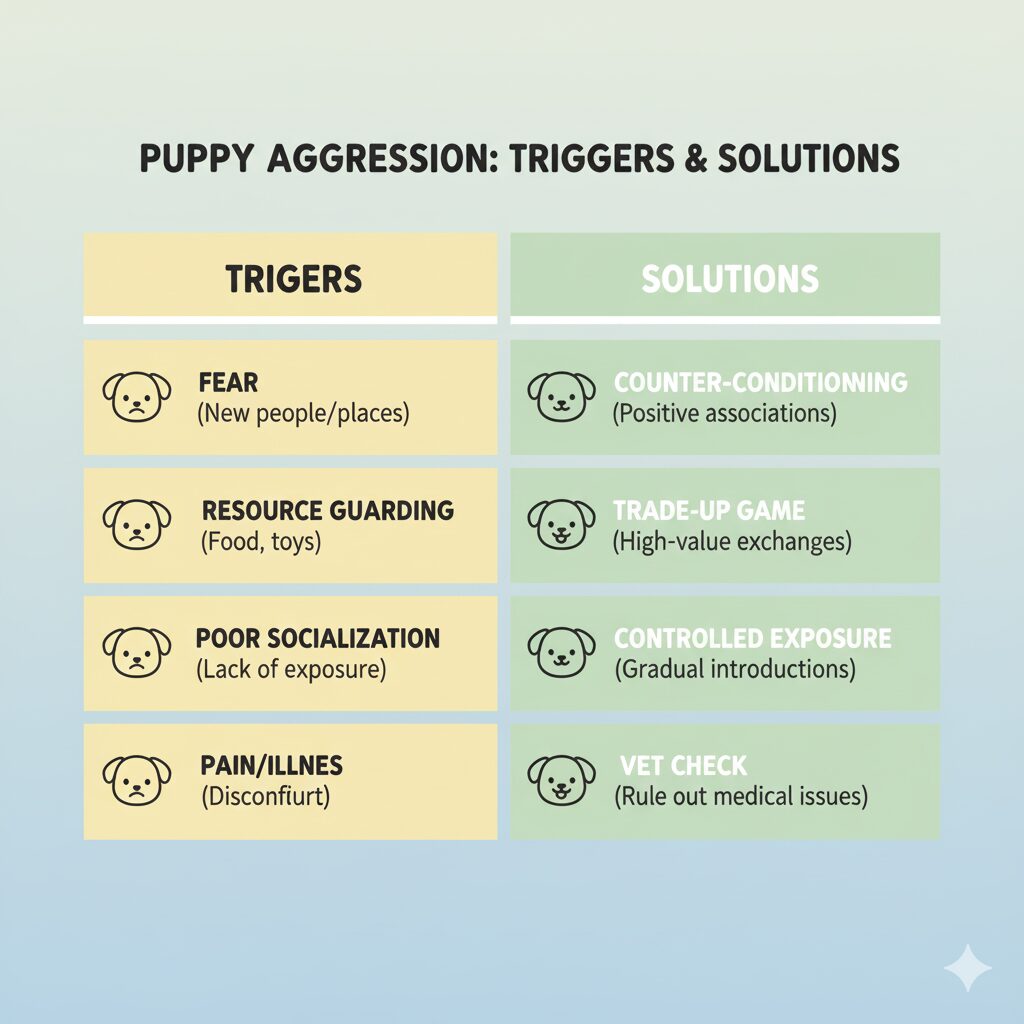
If you’re asking, “Why is my puppy so aggressive?” you’re not alone. Aggression doesn’t happen in a vacuum. Understanding the trigger is essential for solving the problem.
- Fear and Anxiety: New places, loud noises, or unfamiliar people and animals can scare a puppy, causing them to react defensively.
- Resource Guarding: This is when a puppy becomes protective of their food, toys, bed, or even you. They might growl or snap if you try to take something away.
- Territorial Behavior: Your puppy might be trying to protect their space, like your home or yard, from what they see as intruders.
- Pain or Illness: Sometimes, aggression is a sign that your puppy is in pain. An underlying medical issue could be the cause of a sudden change in behavior. (Always consult your vet first!)
- Poor Socialization: Puppies have a critical socialization window (3 to 16 weeks) where they need positive exposure to different sights, sounds, and other animals. A lack of this can lead to fear-based aggression later.
- Frustration: Being held back on a leash or unable to reach a toy can cause frustration, which can sometimes boil over into aggressive behavior.
Also, explore our general dog behavior problems and their solutions, click here.
Breed-Specific Considerations
Concerns about an aggressive Golden Retriever puppy or an aggressive German Shepherd puppy are common, but it’s vital to remember that no breed is born “bad.”
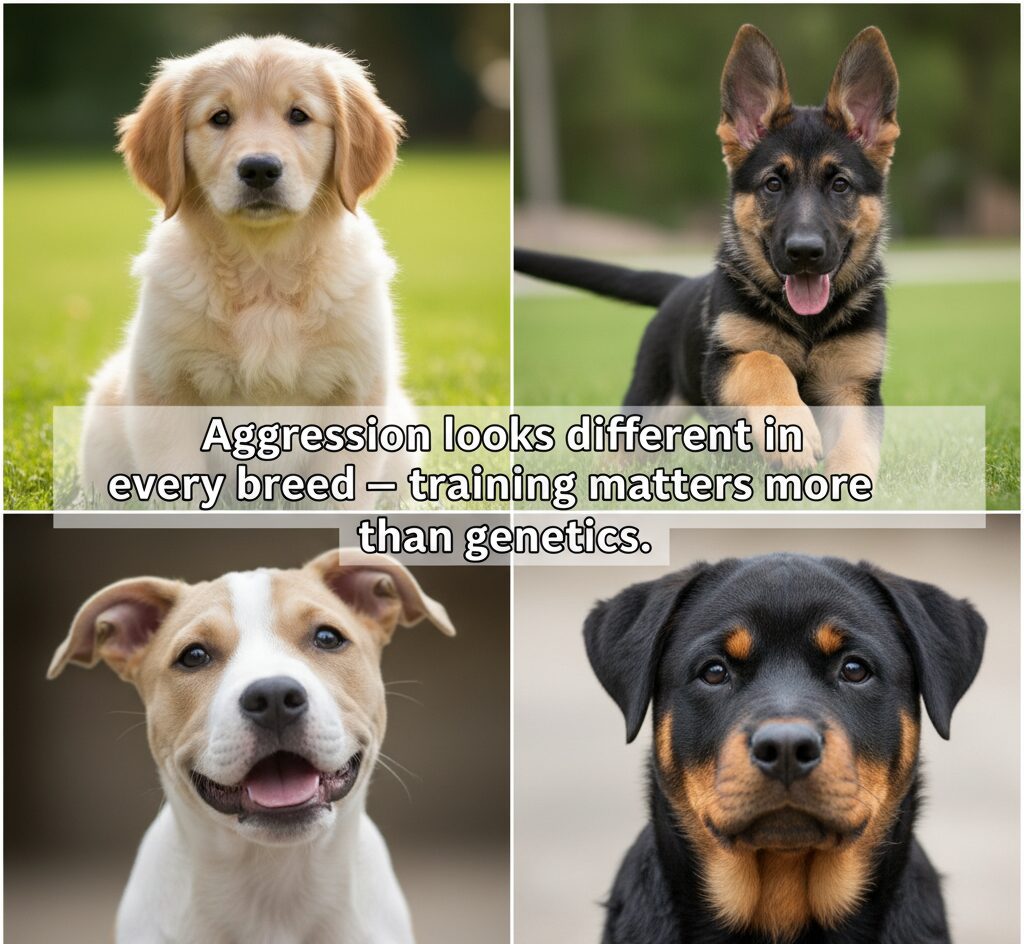
Certain breeds, like Rottweilers or Pitbulls, were bred for protective instincts, which can sometimes be misinterpreted as aggression.
High-energy breeds need more exercise and mental stimulation to prevent boredom, which can lead to destructive or aggressive acts. Understanding your puppy’s genetic background helps you tailor your training to their specific needs. The key is always training and socialization, regardless of the breed.
Proven Training Solutions: How to Stop Aggressive Puppy Behavior
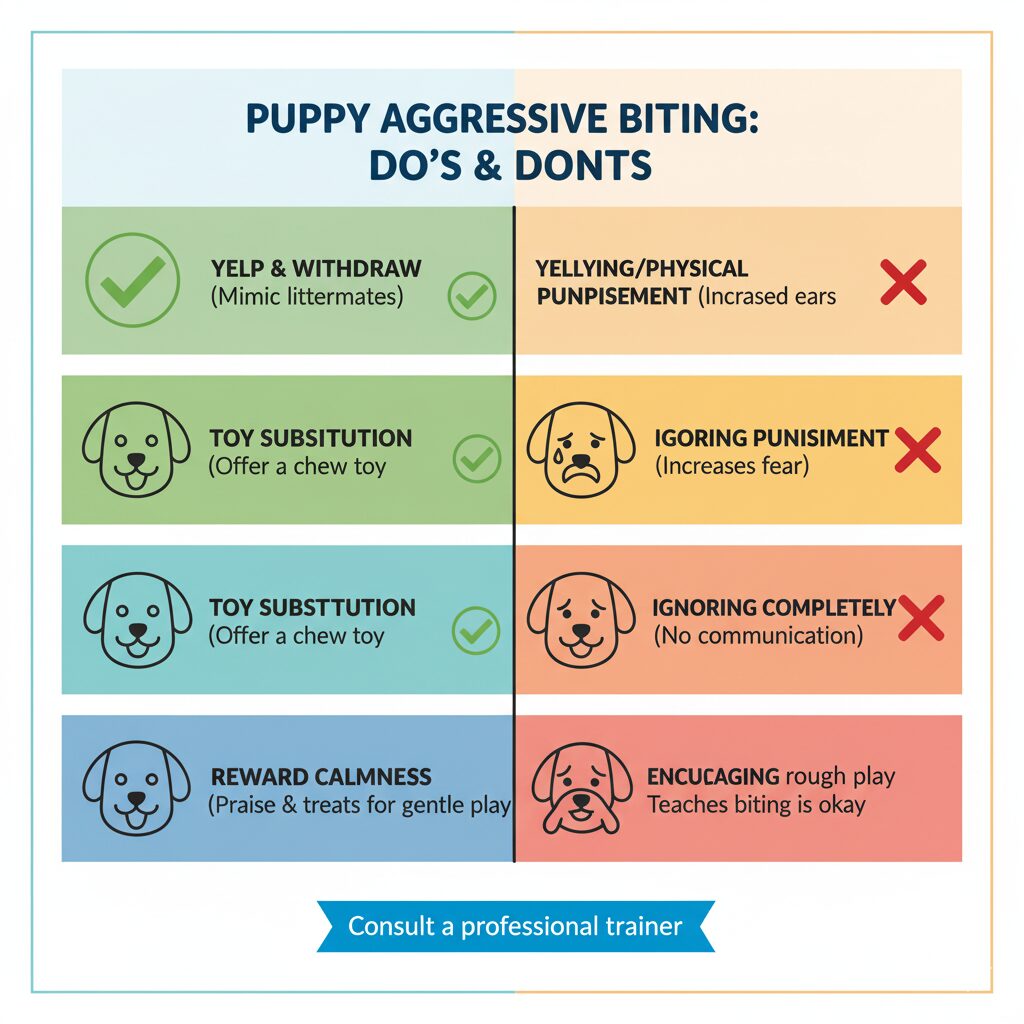
Once you’ve identified the signs and potential triggers, you can start to address the behavior. Punishment is not the answer and can make aggression worse. Instead, focus on positive, consistent training.
Immediate Response Techniques
Knowing how to calm an aggressive puppy in the moment is crucial.
- Redirect: If your puppy starts acting aggressively, interrupt the behavior with a loud, firm “No!” and immediately redirect their attention to an appropriate chew toy.
- Remove: If redirection doesn’t work, calmly remove your puppy from the situation. A brief time-out in their crate or a separate room can help them calm down. This is not a punishment, but a chance to reset.
How to Train an Aggressive Puppy: Step-by-Step
A consistent routine is your best friend when learning how to stop aggressive behavior in puppies.
- Teach Basic Commands: Work on “sit,” “stay,” “leave it,” and “drop it” daily. These commands build impulse control and establish you as the leader.
- Counter-Conditioning: This technique changes your puppy’s emotional response to a trigger. For example, if your puppy is aggressive toward strangers, have a friend stand at a distance and give your puppy a high-value treat. Slowly decrease the distance over several sessions, always pairing the trigger with a positive experience.
- Controlled Exposure: For fearful puppies, slowly and carefully expose them to their triggers in a controlled, safe environment. Keep sessions short and positive.
Puppy Aggressive Biting: How to Stop It
To stop puppy aggressive biting, focus on bite inhibition.
- Yelp and Withdraw: When your puppy bites too hard during play, let out a sharp, high-pitched yelp and pull your hand away. This mimics how their littermates would react and teaches them that hard bites end the fun.
- Toy Substitution: Always have an appropriate chew toy handy. If they start mouthing your hand, replace it with the toy.

When Professional Help is Necessary
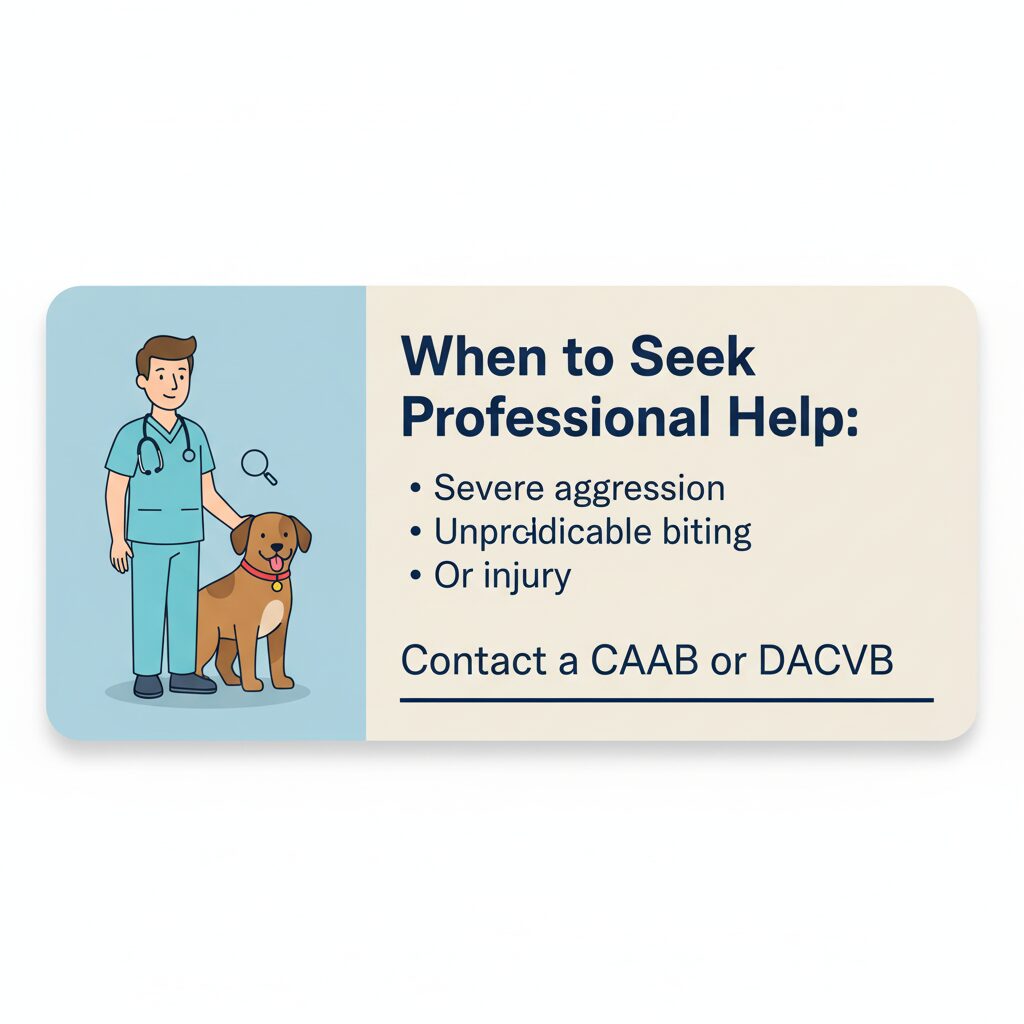
While many issues can be solved at home, some red flags require a professional. If your puppy’s aggression is severe, unpredictable, or causes injury, it’s time to call an expert. Look for a Certified Applied Animal Behaviorist (CAAB) or a Board-Certified Veterinary Behaviorist (DACVB).
These professionals can create a tailored behavior modification plan and, in some cases, may work with your vet to determine if medication is needed to manage anxiety or other underlying issues. Never use physical punishment or yelling, as this can exacerbate the aggression.
Your Path to a Well-Behaved Companion
Seeing aggression in your puppy can be unsettling, but it’s rarely a lost cause. Remember the key differences between normal puppy antics and genuine aggression, and be proactive in your training. Most puppy aggression issues are highly treatable with consistency, patience, and positive reinforcement.
Start by assessing your puppy’s behavior, implement the basic training techniques outlined here, and don’t hesitate to seek professional help if you feel overwhelmed. Early intervention is the most effective way to ensure your puppy grows into a confident, well-adjusted adult dog.
Master DIY Dog Grooming: A Safe & Simple Home Guide
150+ Best German Shepherd Names: Strong. Unique & Cute Ideas
The Complete Guide to Puppy and Food: Everything New Owners Need to Know
Why Is My Dog Acting Weird? 9 Reasons Not to Ignore Strange Behavior
How to Take Care of a Dog: Complete Beginner’s Guide + 10 Expert Tips