Great Dane Feeding Chart: A Guide by Weight
Our blogs are well-researched and medically reviewed under editorial team. The information is sourced from trusted and accurate sites.

How often should a Great Dane puppy (2–4 months) be fed?
3–4 times per day (small, frequent meals).
How long should a Great Dane stay on puppy food ?
12–18 months (consult your vet; they mature slowly).
How much food should an adult (120 lb) Dane with low activity eat?
Approximately 6–8 cups per day, divided into 2 meals.
What is the best way to prevent bloat (GDV)?
Feed 2 or more smaller meals per day, use a slow-feeder bowl, and avoid exercise 1 hour before/after eating.
When should I switch my Dane to senior food?
Around age 7, or when metabolism slows/activity decreases.
Feeding a Great Dane isn’t as simple as just filling a large bowl. Their rapid growth from puppy to adult makes proper nutrition critical.
The right diet at the right time helps prevent serious health issues, particularly joint problems that can plague large breeds.
This guide provides a clear, easy-to-follow feeding chart for your Great Dane, from their first days with you to their golden senior years.
We’ll cover puppy feeding schedules, how to transition to adult food, the dietary needs of senior dogs, and other key factors that influence how much you should feed your gentle giant.
Read about the Great Dane Feeding Chart By Age
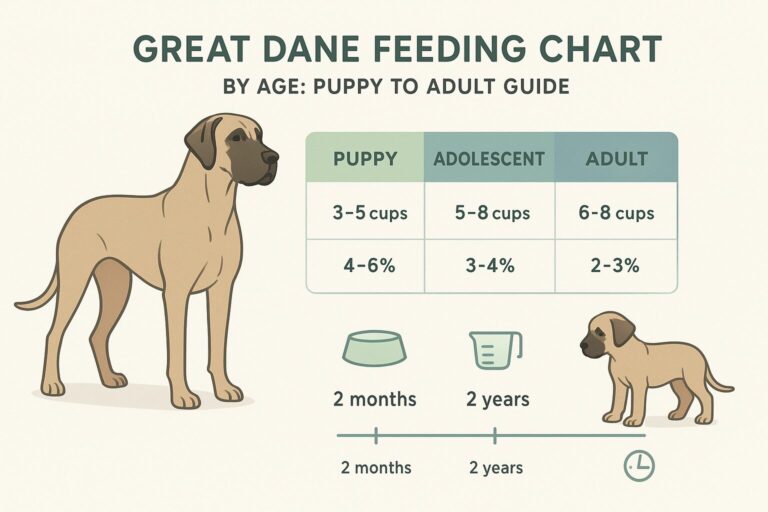
Great Dane Puppy Feeding Chart by Weight (2–12 Months)
Great Dane puppies have unique nutritional needs because of their astonishing growth rate. It’s crucial to feed them a high-quality, large-breed puppy formula. These specialised foods are formulated with controlled levels of calcium and phosphorus to support steady bone development and prevent growth-related skeletal problems.
The Complete Guide to Puppy and Food: Everything New Owners Need to Know
Below is a general feeding chart for Great Dane puppies. Remember, these are starting points, and your puppy’s individual needs may vary.
Average Weight (Male): 25–45 lbs (11–20 kg)
Average Weight (Female): 20–35 lbs (9–16 kg)
Food Amount: 3–6 cups/day
Feeding Frequency: 3–4 meals
Average Weight (Male): 60–85 lbs (27–38 kg)
Average Weight (Female): 50–70 lbs (23–32 kg)
Food Amount: 5–8 cups/day
Feeding Frequency: 3 meals
Average Weight (Male): 90–120 lbs (41–54 kg)
Average Weight (Female): 75–100 lbs (34–45 kg)
Food Amount: 6–10 cups/day
Feeding Frequency: 2–3 meals
Average Weight (Male): 110–140 lbs (50–63 kg)
Average Weight (Female): 95–120 lbs (43–54 kg)
Food Amount: 8–12 cups/day
Feeding Frequency: 2 meals
- Frequency Note: As your puppy grows, you’ll gradually reduce their feeding frequency. They typically start with four small meals a day, which helps their delicate digestive systems and maintains stable energy levels.
- By around four months, you can transition to three meals a day, and by six to eight months, most puppies are ready for two meals a day, a schedule they’ll likely maintain through adulthood.
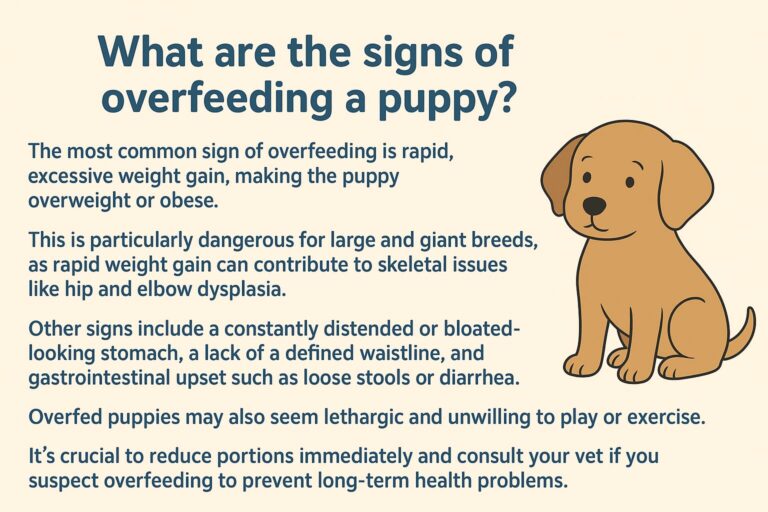
- Monitoring: Male Great Danes are generally larger than females and may require slightly more food. Always monitor your puppy’s body condition. You should be able to feel their ribs under a thin layer of fat, but not see them clearly.
Transitioning to Adult Food (12–18 Months)
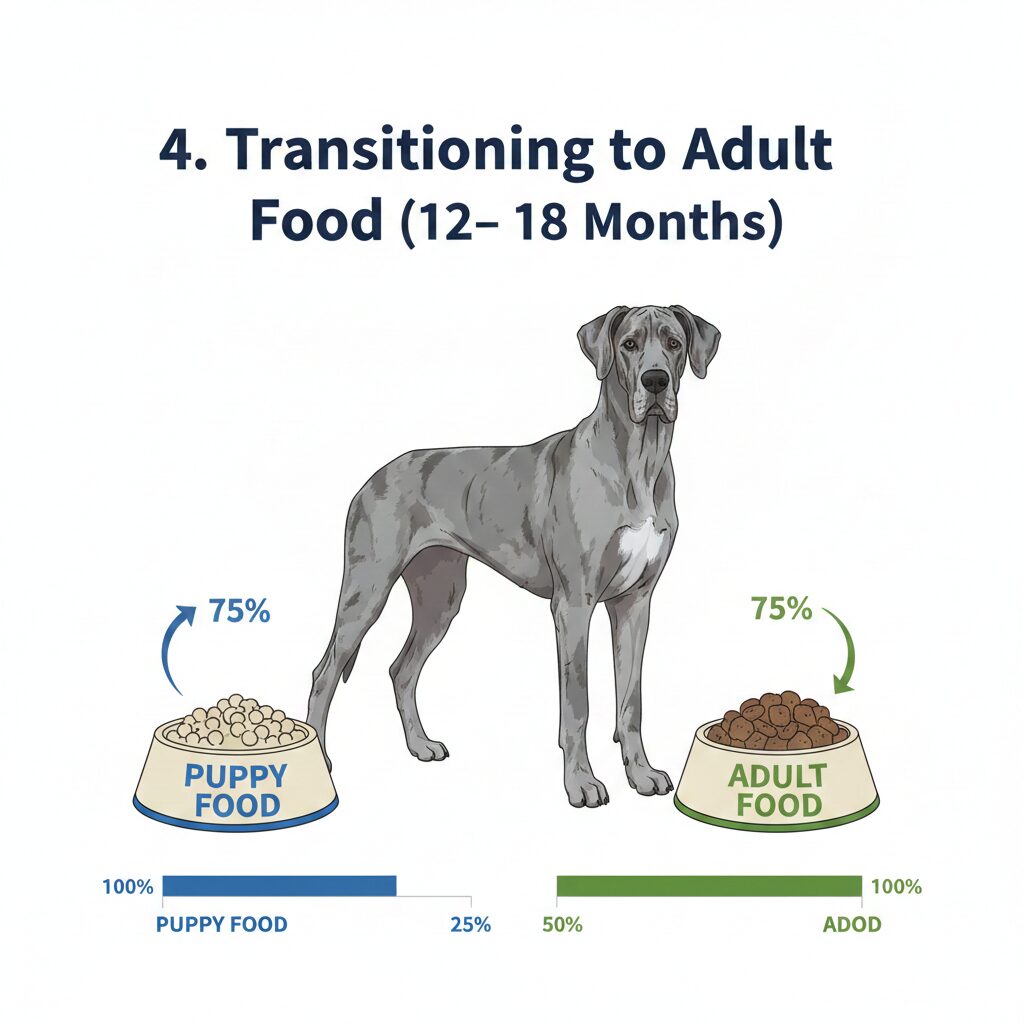
Great Danes mature more slowly than smaller breeds, and they should stay on puppy food until they are between 12 and 18 months old. Consult your vet to determine the best time to make the switch.
How much food to feed a puppy per day?
When you do transition, do it gradually over 7 to 10 days to avoid digestive upset. A slow switch gives your dog’s system time to adjust to the new formula.
Sample Transition Schedule
Percentage of Puppy Food: 75%
Percentage of Adult Food: 25%
Percentage of Puppy Food: 50%
Percentage of Adult Food: 50%
Percentage of Puppy Food: 25%
Percentage of Adult Food: 75%
Percentage of Puppy Food: 0%
Percentage of Adult Food: 100%
Tip: Choose a high-quality adult food specifically designed for large breeds. These formulas will provide the right balance of protein, fat, and nutrients to support the health of a fully-grown Great Dane.
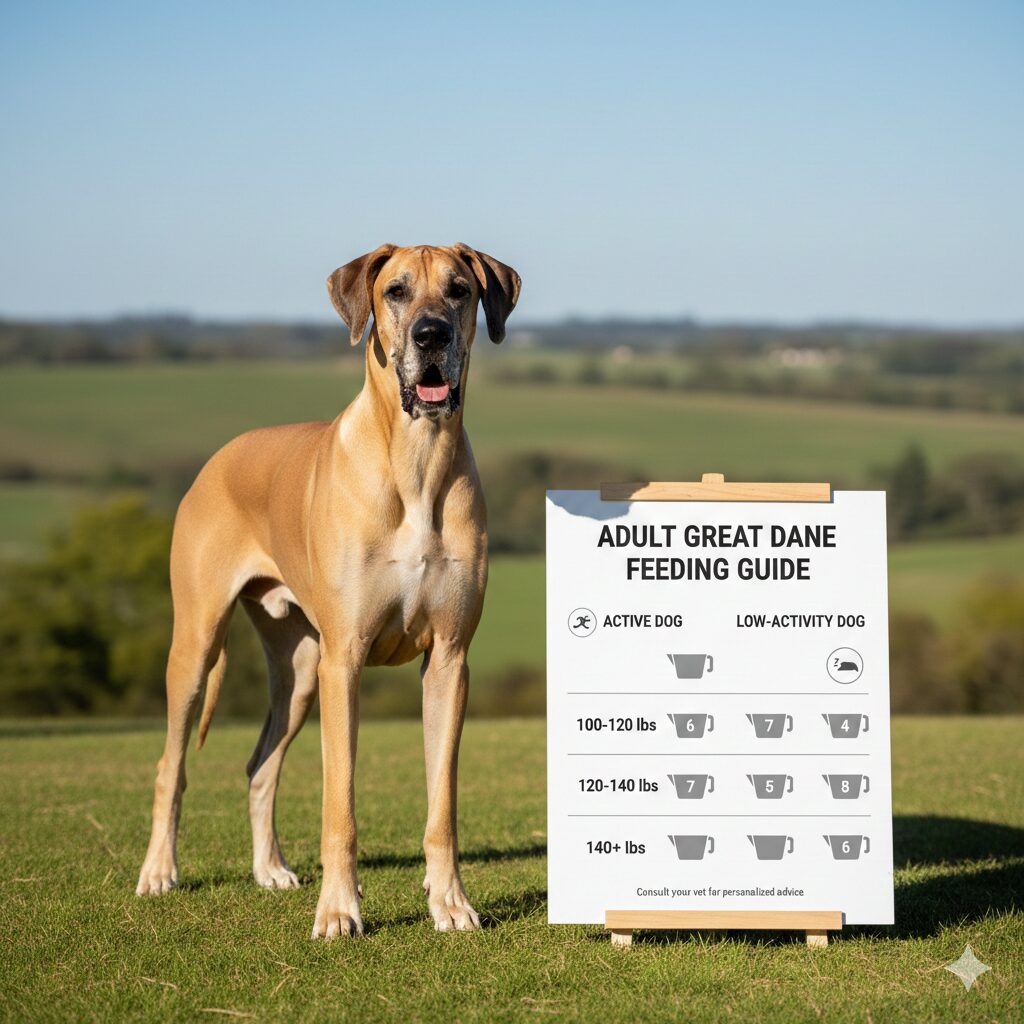
Adult Great Dane Feeding Chart by Weight (1.5–7 Years)
Once your Great Dane is an adult, their diet will focus on maintenance. The amount of food they need depends on their weight, metabolism, and activity level. Always feed adult Great Danes two meals per day to reduce the risk of bloat.
Food Amount (Low Activity): 6–8 cups/day
Food Amount (High Activity): 8–10 cups/day
Food Amount (Low Activity): 8–10 cups/day
Food Amount (High Activity): 10–12 cups/day
Food Amount (Low Activity): 10–12 cups/day
Food Amount (High Activity): 12–14+ cups/day
Important Note: This is just a guideline. The calorie content (kcal/cup) varies significantly between dog food brands. Always check the feeding instructions on your specific dog food bag for a more accurate starting point.
Senior Great Dane Feeding Needs (7+ Years)
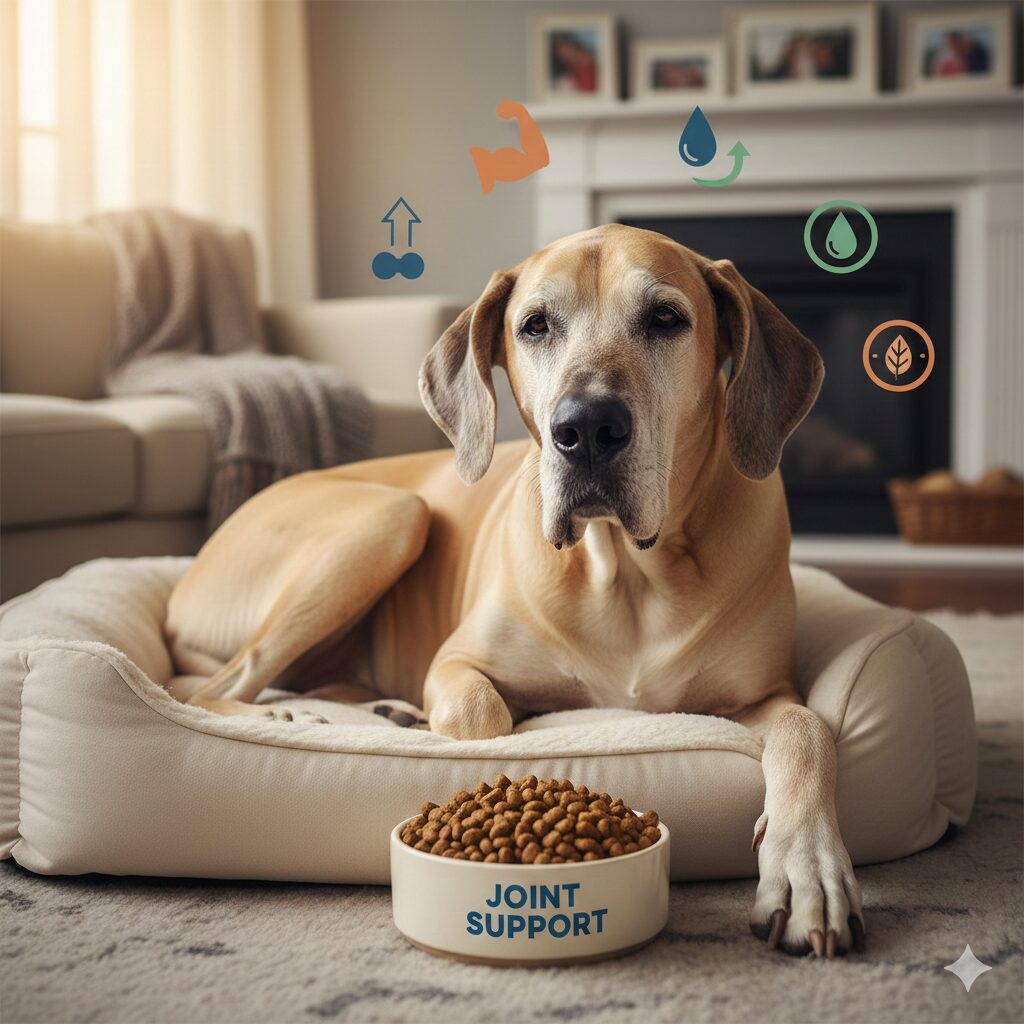
As Great Danes enter their senior years (around age seven), their metabolism slows down, and they often become less active. Their nutritional needs change, and it’s important to adjust their diet to prevent obesity, which puts a dangerous strain on their ageing joints.
- Switch to Senior Formula: Consider switching to a senior large-breed formula. These foods are typically lower in calories and fat but higher in fibre to aid digestion.
- Joint Support: Many senior foods contain supplements like glucosamine and chondroitin to support joint health.
- Monitoring: Monitor your senior Dane’s weight closely and adjust their food portions as needed to maintain a healthy body condition.
Factors That Influence Feeding Amounts
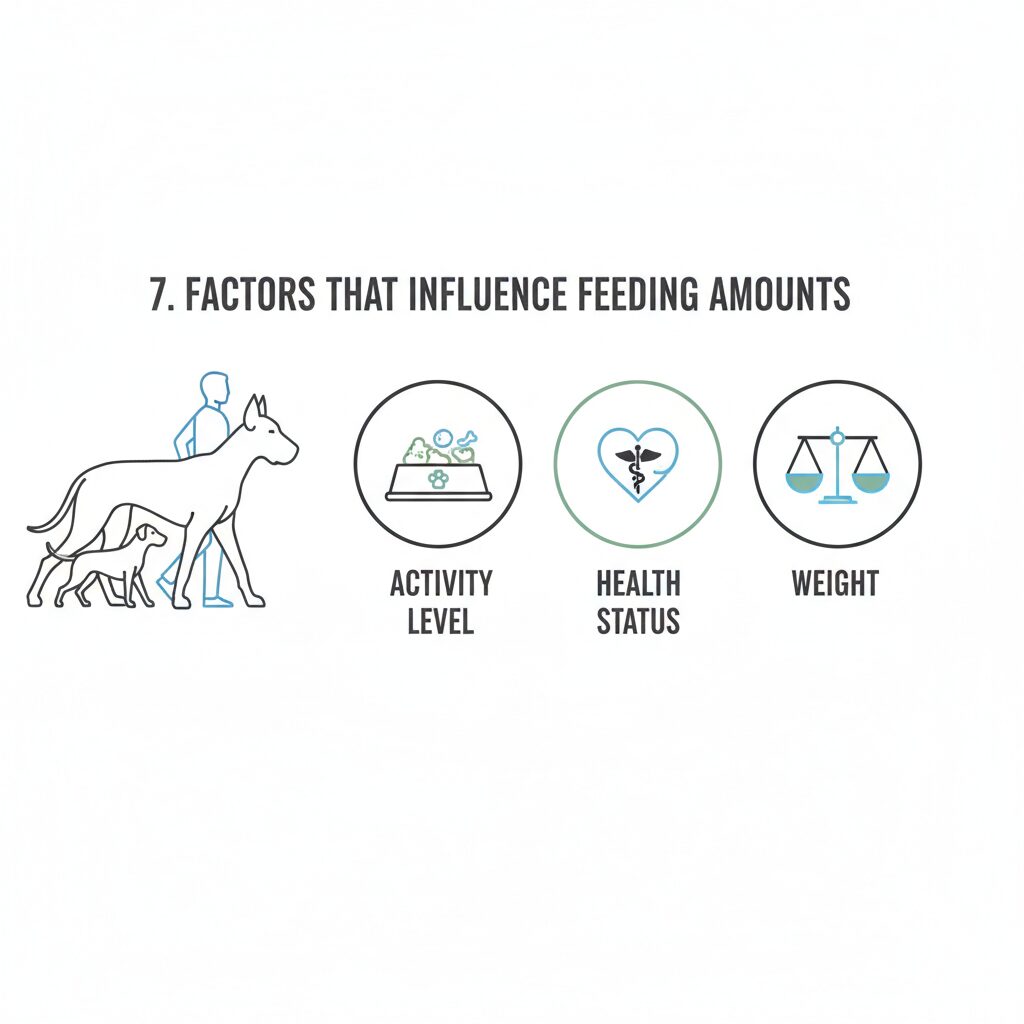
The charts above are great starting points, but several factors will influence how much food your Great Dane truly needs.
- Activity Level: A Great Dane who enjoys long daily walks or runs will burn more calories and require more food than a more sedentary dog.
- Type of Food: Calorie density differs between kibble, wet food, and raw diets. A cup of one brand’s kibble may have 350 calories, while another may have 500. Always read the label.
- Health Conditions: Certain health issues, like thyroid problems or allergies, can impact your dog’s dietary needs. Always work with your vet to manage their diet if they have a medical condition.
- Spaying/Neutering: Spayed or neutered dogs often have a slower metabolism, which means they might need up to 20% fewer calories to maintain a healthy weight.
- How much food to feed a puppy per day?
The Danger of Overfeeding and Bloat

Bloat, or Gastric Dilatation-Volvulus (GDV), is a life-threatening condition that Great Danes are highly susceptible to. The stomach fills with gas and twists on itself, cutting off blood flow. Overfeeding or eating too quickly can increase the risk.
Here are actionable tips to help reduce the risk of bloat:
- Frequency: Feed two or more smaller meals per day instead of one large one.
- Exercise: Avoid strenuous exercise for at least an hour before and after meals.
- Pace: Use a slow-feeder bowl to prevent your dog from gulping down their food.
- Water: Ensure fresh water is always available, but discourage them from drinking large amounts right after eating.
Your Partner in Your Dane’s Health
Feeding your Great Dane correctly is one of the most important things you can do for their long-term health and happiness. While these charts offer a solid foundation, remember that every dog is an individual. The best way to know if you’re feeding the right amount is to monitor their body condition. You should be able to feel their ribs but not see them distinctly.
For a plan tailored perfectly to your gentle giant, always consult your veterinarian. They can help you navigate your dog’s changing needs and ensure they thrive at every stage of life.