How to Properly Bathe a Dog: 5 Easy Step-by-Step Tips
Our blogs are well-researched and medically reviewed under editorial team. The information is sourced from trusted and accurate sites.
How to Properly Bathe a Dog?
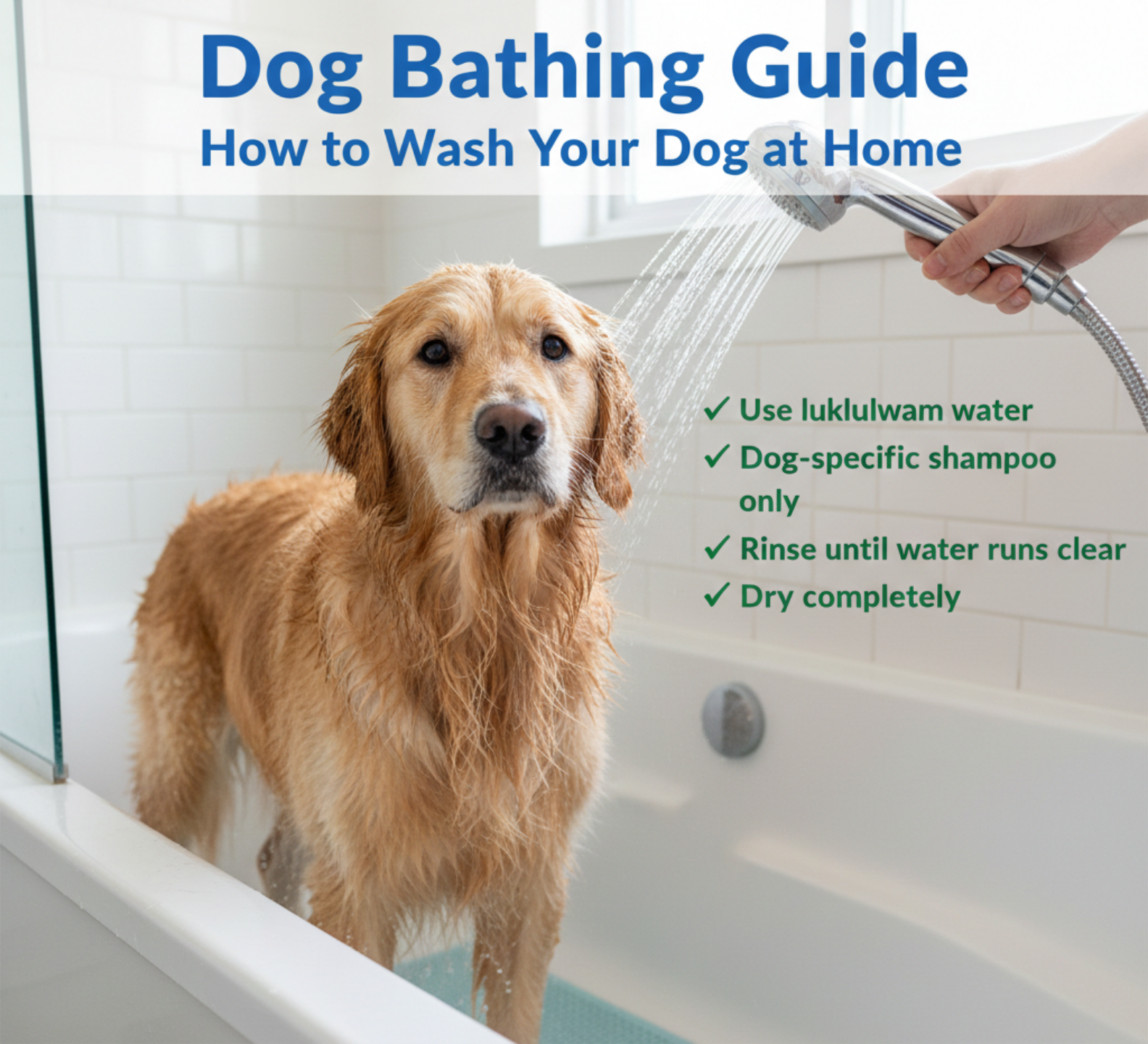
- Brush your dog before the bath to remove loose fur and tangles.
- Use lukewarm water to wet your dog thoroughly.
- Apply dog-specific shampoo and lather gently.
- Rinse completely to remove all soap residue.
- Dry your dog with towels or a pet-safe dryer.
- Reward your dog with treats and praise.
Before You Start: Essential Preparation
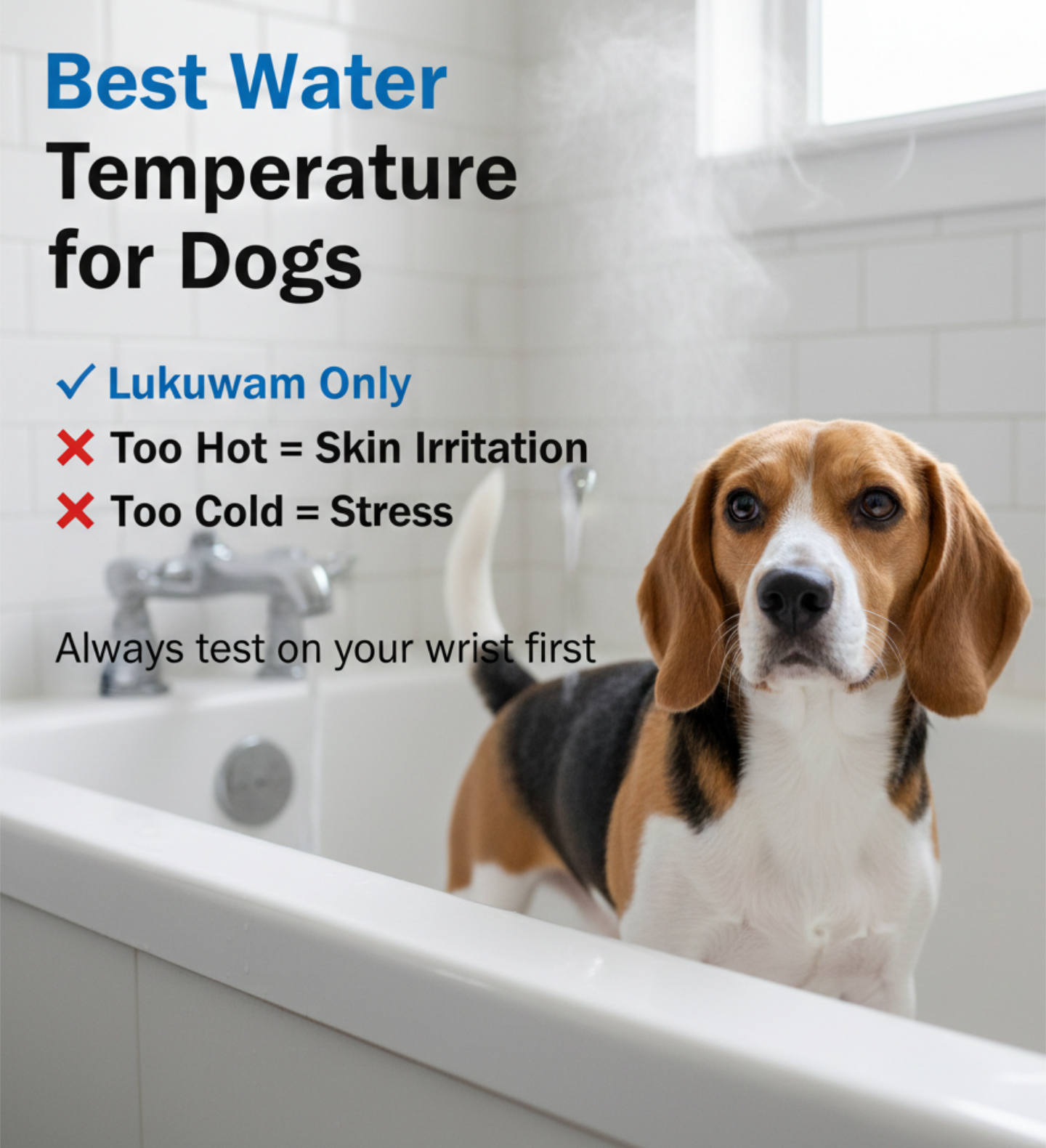
- Good preparation makes home dog washing easier and less stressful.
- Gather all your supplies before you bring your dog to the washing area. You’ll need dog shampoo, towels, a brush, treats, a non-slip mat, and a cup or handheld sprayer.
- Brush your dog first to remove mats and loose fur. This step is crucial because washing over tangles makes them worse. It also helps the shampoo reach the skin and makes rinsing easier.
- Trim your dog’s nails if needed. This protects you from accidental scratches during bath time.
- Place a non-slip mat in your washing area. This helps your dog feel more secure and reduces anxiety.
Home Dog Washing: Step-by-Step Process
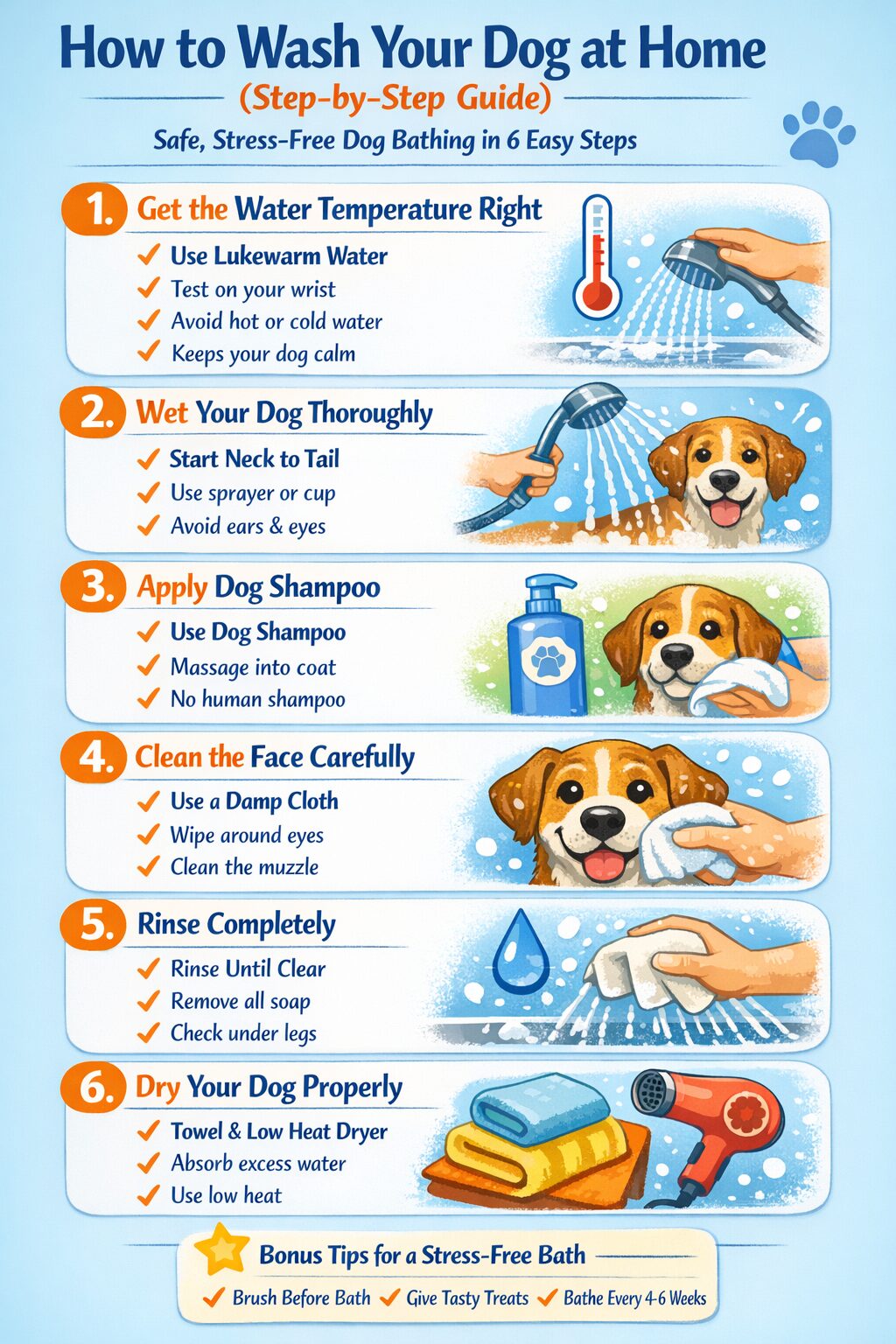
Step 1: Get the water temperature right
Dogs prefer lukewarm water. Test it on your wrist first. Water that is too hot or too cold will stress your dog and make the experience unpleasant.
Step 2: Wet your dog thoroughly
Start from the neck and work backwards. Avoid getting water directly in the ears and eyes. Use a handheld sprayer or cup to control water flow.
Step 3: Apply dog shampoo
Use only products made for dogs. Human shampoo can irritate their skin and strip natural oils. Work the shampoo into a lather and massage gently into the coat.
Step 4: Clean the face carefully
Use a damp washcloth instead of spraying water directly on your dog’s face. Wipe around eyes, ears, and muzzle gently. This prevents water from entering sensitive areas.
Step 5: Rinse completely
Leftover shampoo causes itching and skin problems. Rinse until the water runs clear. Pay extra attention to areas where soap tends to hide, like under the legs and around the collar area.
Step 6: Dry your dog
Use absorbent towels to remove excess water. For dogs with thick coats, consider a pet safe blow dryer on low heat. Keep the dryer moving and test the temperature frequently on your hand.
How Often Should You Bathe Your Dog?
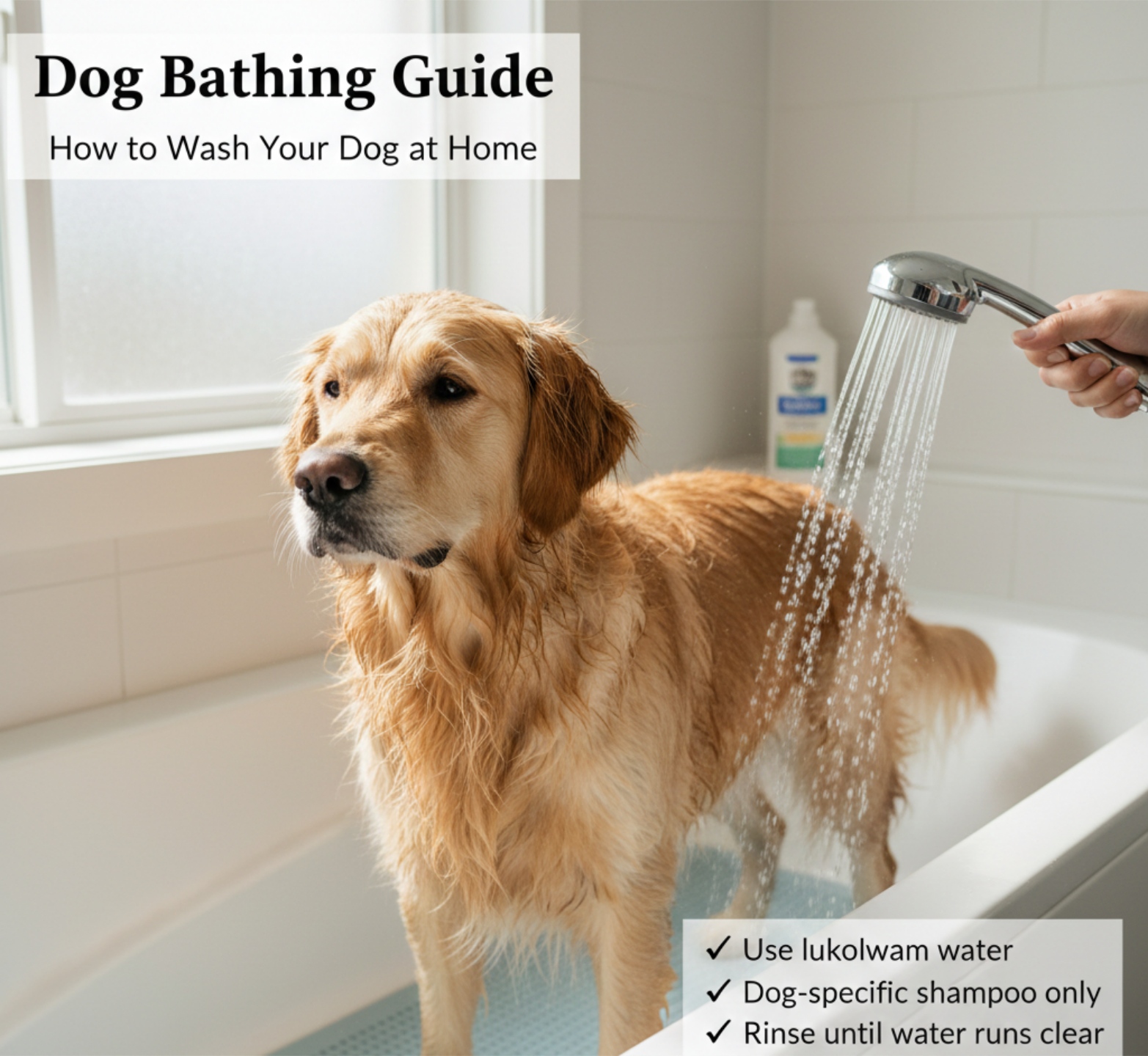
Infographic chart showing recommended dog bathing frequency by coat type.
| Coat Type | Recommended Frequency |
|---|---|
| Short smooth coat | Every 2 to 3 months |
| Medium coat | Every 1 to 2 months |
| Long or thick coat | Every 4 to 6 weeks |
| Curly or wiry coat | Every 4 to 8 weeks |
| Dogs with skin conditions | As directed by vet |
Adjust based on lifestyle factors. Active outdoor dogs need more frequent baths. Dogs with allergies may benefit from more regular washing to remove allergens from their coat.
How to Wash a Dog Without a Bathtub
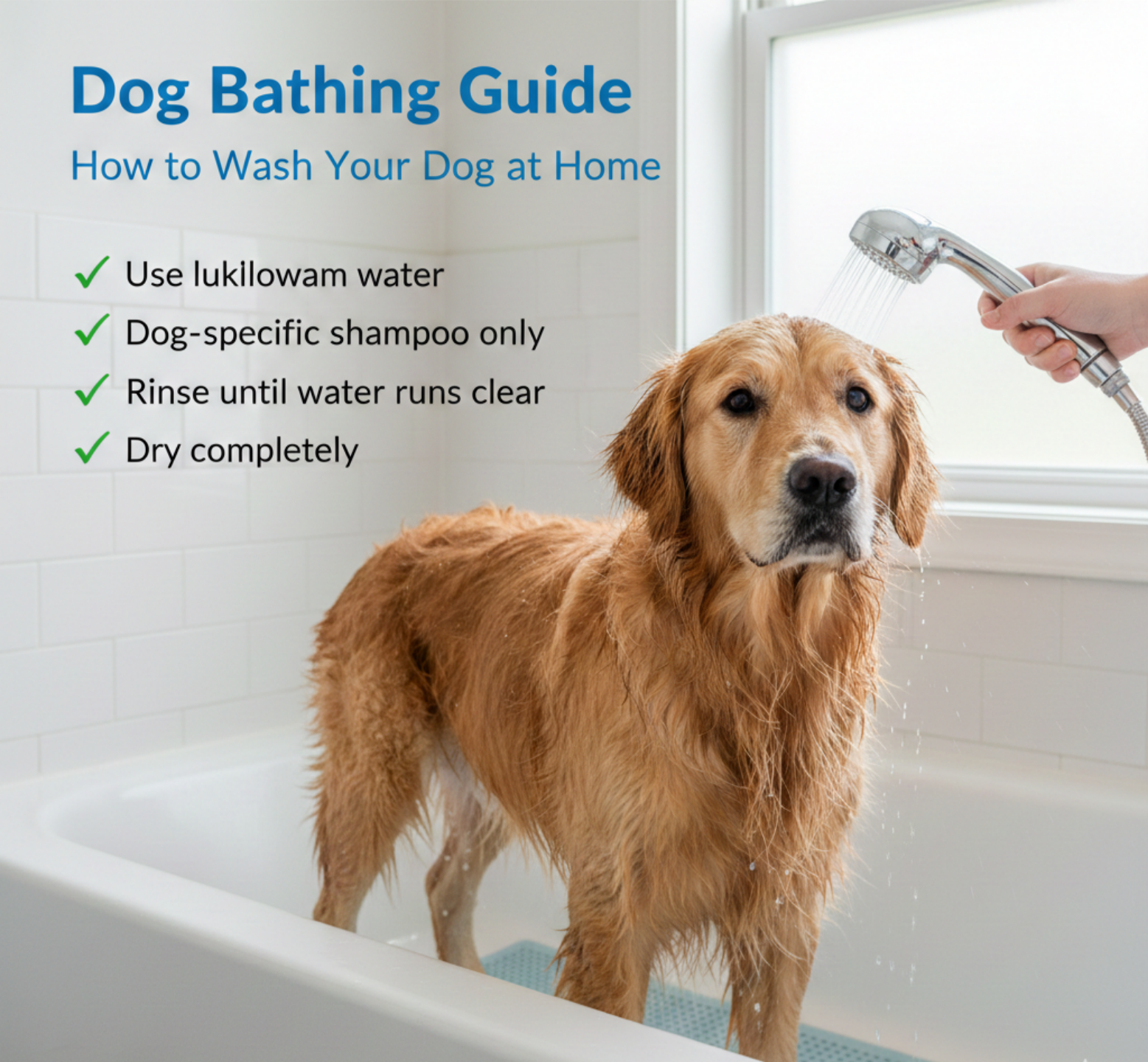
Not everyone has a bathtub suitable for washing dogs. Here are practical alternatives for home dog washing.
Use your shower instead
Remove loose items and use a handheld showerhead for better control. A non-slip mat is essential here to prevent slipping on wet surfaces.
Try a large plastic tub or kiddie pool
Place it in your bathroom, laundry room, or garage. Fill with a few inches of lukewarm water. This works especially well for small to medium sized dogs.
Wash your dog outside
Connect a hose to an outdoor faucet. Make sure the water temperature is comfortable. Choose a warm day to prevent your dog from getting cold. Let the water run for a minute first to ensure it’s not too hot from sitting in the hose.
Visit a self-service dog wash
Many pet stores offer washing stations with raised tubs and professional equipment. These facilities provide everything you need, and cleanup is their responsibility.
Pet Grooming Tips for Dogs That Hate Water
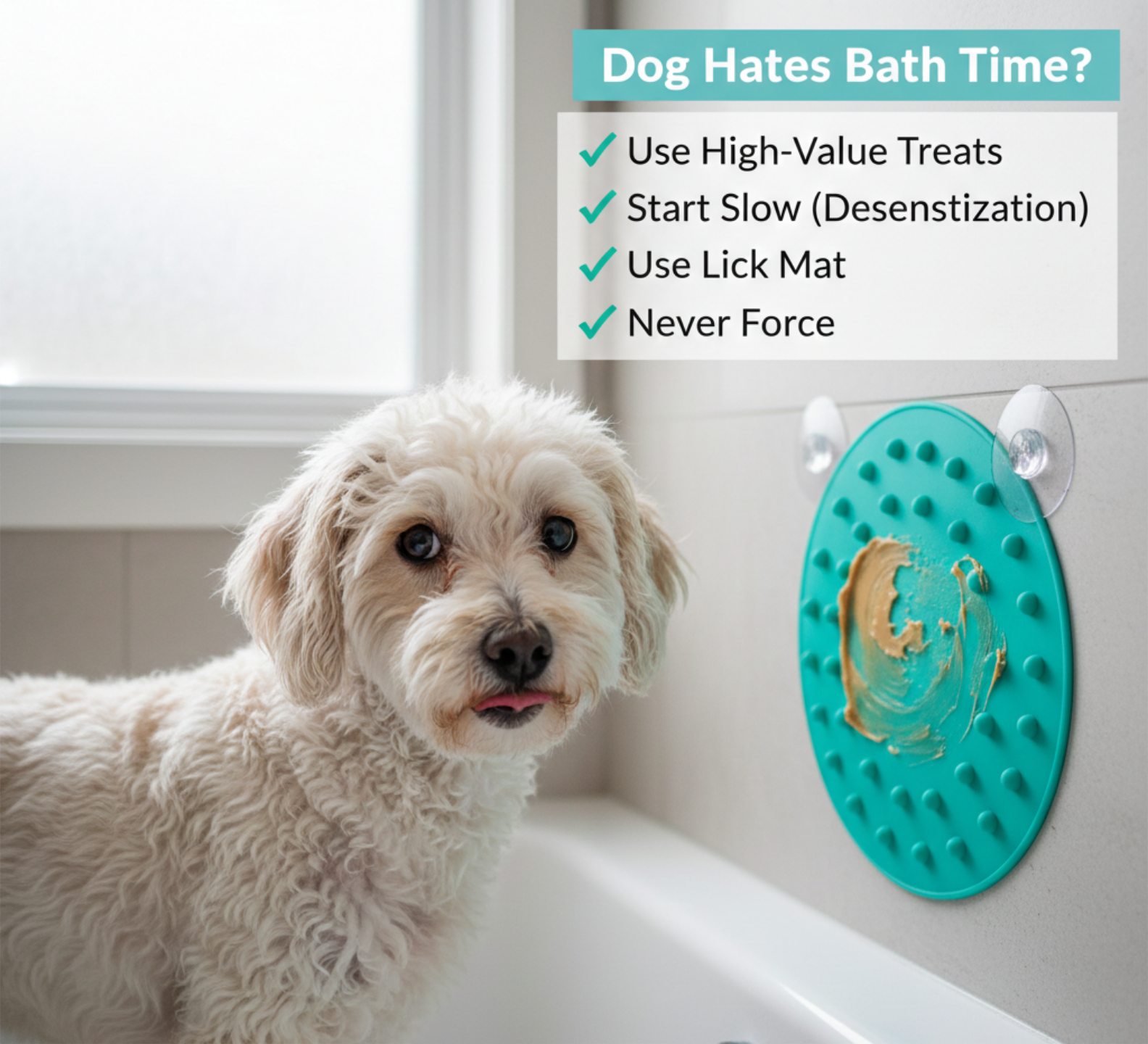
Some dogs resist bath time no matter what you do. These pet grooming tips can help make the process smoother.
Start desensitization training early. Let your dog explore the bathing area when it’s dry and calm. Reward them for staying relaxed near the tub or shower.
Use high value treats throughout the process. Reward calm behavior immediately. This creates positive associations with bath time.
Keep sessions short at first. Gradually increase duration as your dog becomes more comfortable. You might only wet their paws during the first session.
Stay calm yourself. Dogs pick up on human anxiety and stress. If you’re tense, your dog will be too.
Consider using a lick mat with peanut butter. Stick it to the wall of your tub or shower. This distracts your dog and gives them something positive to focus on during the bath.
Play calming music or white noise. This can reduce stress and mask scary sounds like running water.
Never force your dog into the water. This creates negative associations that make future baths even harder.
Common Mistakes to Avoid
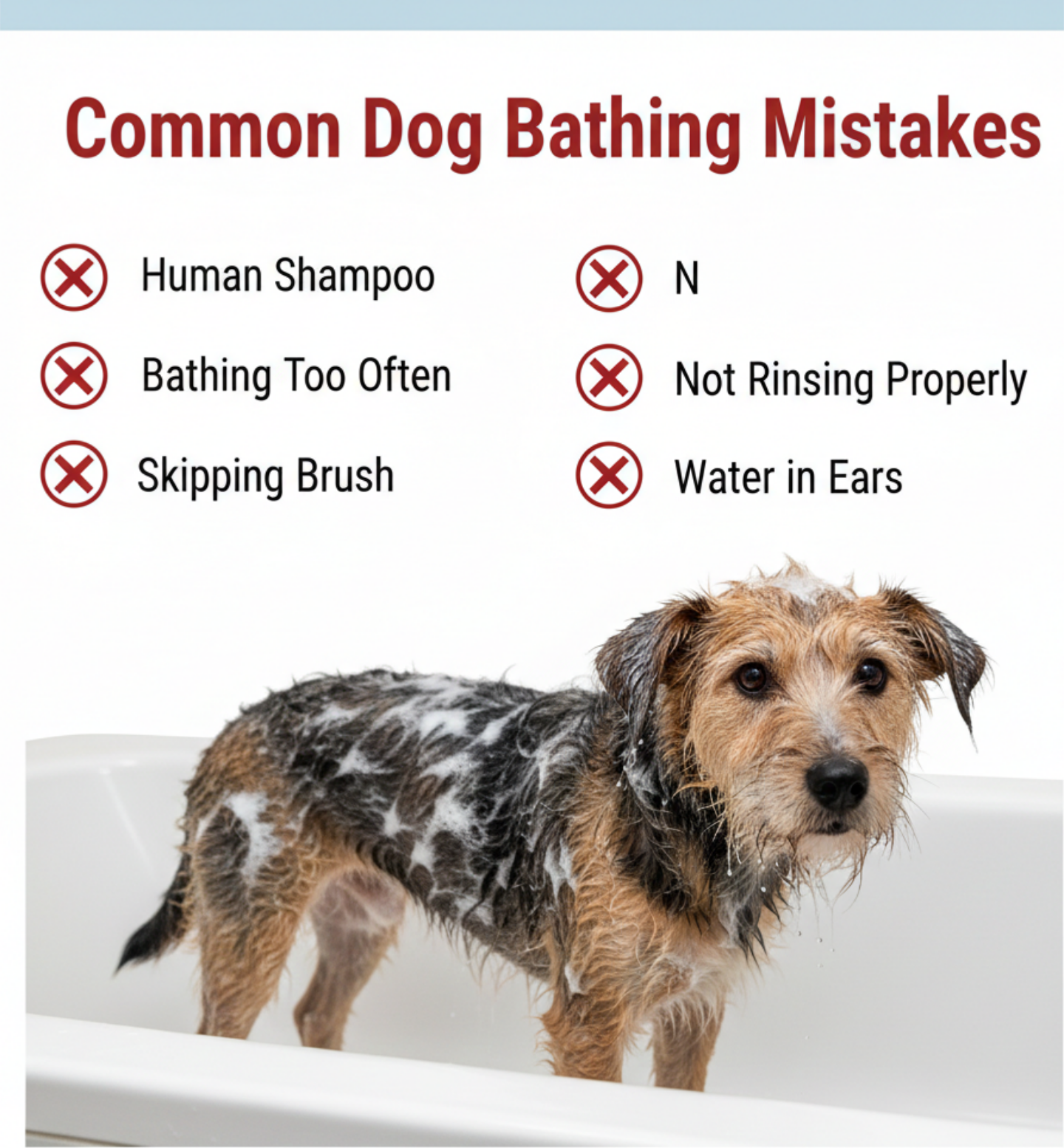
Using human shampoo
This strips natural oils and irritates skin. Always use dog specific products formulated for their pH levels.
Bathing too frequently
Most dogs only need baths every 4 to 6 weeks. Over bathing dries out skin and can lead to irritation.
Skipping the brush
Washing matted fur makes tangles worse and traps water against the skin.
Getting water in ears
This can lead to ear infections. Place cotton balls in ears before bathing as a protective barrier.
Rushing the process
Taking your time keeps both you and your dog calmer. A rushed bath creates stress and negative associations.
Forgetting to rinse thoroughly
Soap residue causes itching and hot spots. Spend extra time rinsing to ensure all shampoo is removed.
Understanding Dog Bathing Rules and Guidelines
Several dog care principles can improve your approach to home dog washing.
The 777 rule for dogs
This training guideline suggests giving new dogs 7 days to decompress, 7 weeks to learn routines, and 7 months to feel fully comfortable. Apply this patience to bath training too. Don’t expect a rescue dog to love baths immediately.
The 7 steps of grooming a dog
Complete grooming includes brushing, bathing, drying, nail trimming, ear cleaning, teeth brushing, and final inspection. These pet grooming tips ensure your dog stays healthy and comfortable.
The 150 rule for dogs
Some trainers recommend 150 positive interactions for every negative one. Apply this during bath time by offering constant praise and treats. Make the positive moments outweigh any discomfort.
Make Bath Time a Positive Experience
Proper preparation, gentle techniques, and patience make all the difference when washing your dog at home.
Home dog washing is a skill that improves with practice. Your first few attempts might feel chaotic, but each bath will get easier as you and your dog learn the routine.
Remember that every dog is different. Some will always tolerate rather than enjoy baths, and that’s perfectly okay. The goal is to make the experience as stress free as possible.
Stay consistent and keep the experience positive. Use treats, praise, and patience. Over time, your dog may even start to tolerate or enjoy bath time.
Bookmark this dog bathing guide for future reference. Share your own pet grooming tips in the comments below. Your experience might help another dog owner struggling with bath time.